Updated and re-published May 15, 2026.
A ground fault occurs when electrical current leaves its intended path and flows directly to ground. Instead of remaining contained within circuit conductors, the current may travel through equipment frames, metal surfaces, water or other conductive materials. When this happens, any energized surface that a person can touch can become a serious safety hazard.
Ground faults can develop for several reasons, including damaged insulation, deteriorated wiring, moisture intrusion, equipment failure or accidental contact between energized conductors and grounded surfaces. These conditions are especially common in demanding industrial, commercial and outdoor environments where electrical systems face constant exposure to vibration, contaminants and changing weather conditions.
If a ground fault is left undetected, it can create several dangerous conditions:
Electric Shock
Electrical shock remains one of the most common risks associated with ground faults. When current flows through an unintended path, people who come into contact with energized equipment or conductive surfaces can receive a potentially severe shock. The risk increases significantly in wet or damp locations, such as bathrooms, construction sites, utility applications and outdoor environments where standing water lowers electrical resistance.
Burns
Ground faults can generate substantial heat when fault current flows through conductive materials. This heat can rapidly raise the temperature of electrical equipment, cables or metal enclosures. Contact with overheated equipment may result in serious thermal burns, while arc flashes associated with larger faults can cause catastrophic injuries.
Fire Hazards
Uncontrolled fault current creates excessive heat that can ignite nearby combustible materials. Electrical fires caused by ground faults can spread quickly through wiring systems, panels and connected equipment, resulting in costly downtime, infrastructure damage and significant safety risks for personnel.
Because many ground faults develop gradually and remain unnoticed until a failure occurs, understanding the causes of ground faults is critical for maintaining electrical safety and system reliability. Proper grounding, routine equipment inspections, and ground fault protection systems all play an important role in reducing risk and protecting personnel and equipment from ungrounded or faulted circuits.
What Causes A Ground Fault?
Several conditions can create a ground fault, particularly when electrical systems operate in harsh, high-moisture or poorly maintained environments. In many cases, ground faults develop gradually as electrical components age, insulation deteriorates, or equipment becomes exposed to contaminants and physical damage. Identifying the most common causes of ground faults can help facilities reduce safety risks, prevent equipment damage, and improve overall system reliability.
Water Intrusion And Moisture Exposure
Water is a highly conductive substance that can easily create an unintended path for electrical current. When moisture enters electrical enclosures, conduit systems, or equipment housings, current may bypass its intended circuit and flow directly to ground. Ground faults caused by moisture are especially common in utility facilities, construction sites, and outdoor electrical installations where equipment faces constant exposure to rain, humidity, sea spray, or standing water. Corrosion caused by long-term moisture exposure can also weaken electrical connections and increase the likelihood of future faults.
Worn Or Deteriorated Wiring
Electrical wiring naturally degrades over time due to heat, vibration, environmental exposure, and normal wear. As insulation begins to crack, fray, or deteriorate, energized conductors may come into contact with grounded surfaces or nearby conductive materials. In some environments, rodents and insects may damage insulation by chewing through wiring … thus creating additional fault risks. Routine inspections and preventive maintenance play a critical role in identifying deteriorated wiring before a ground fault occurs.
Faulty Wiring And Loose Connections
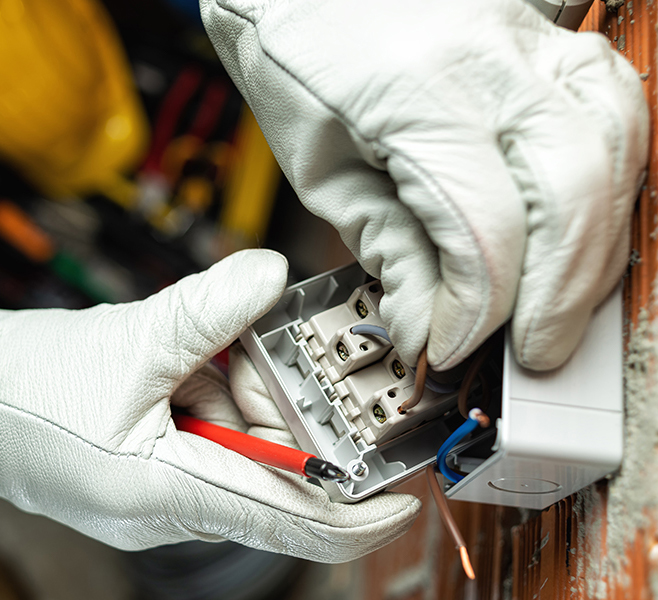
Improper installation practices, loose electrical connections, and poorly routed circuits can all contribute to ground faults. When conductors are not securely terminated or correctly routed, electrical current may arc, leak, or travel outside the intended path. Loose connections can also generate excessive heat, which accelerates insulation breakdown and increases the risk of both ground faults and electrical fires. Facilities that undergo frequent equipment modifications or expansions should periodically evaluate wiring integrity to ensure systems continue operating safely.
Damaged Electrical Equipment
Electrical equipment with damaged insulation, cracked housing, or internal component failures can become a source of ground faults. Portable tools, motors, and industrial equipment often experience heavy wear during normal operation … thus making them especially vulnerable to damage over time. Once internal conductors become exposed, fault current may energize external metal surfaces and create a serious shock hazard for personnel who touch the equipment.

Ground faults most commonly occur when moisture, damaged wiring, faulty connections, or damaged equipment allow electrical current to escape its intended path and energize grounded surfaces.
Ground Fault Mitigation
Ground faults create significant operational and safety challenges in commercial and industrial power systems because they often originate from insulation breakdown, conductor degradation, faulty equipment, or improper grounding conditions. In medium- and low-voltage distribution systems, even a low-level ground fault can generate damaging fault current, create arc flash hazards, and accelerate equipment failure in the condition is not detected and isolated quickly. Critical electrical infrastructure, temporary power systems, substations, data centers, manufacturing operations, or utility power distribution systems must maintain continuous visibility into electrical system health to minimize the risk of downtime, equipment damage, and personnel exposure.
Modern ground fault protection strategies rely on a combination of properly engineered grounding systems, protective devices, and ongoing system monitoring. In industrial environments, protective schemes must coordinate across switchgear, transformers, cable assemblies, and power distribution equipment to ensure faults are isolated selectively, and without unnecessarily disrupting critical operations.
Effective ground fault mitigation programs typically include:
- Insulation resistance testing to identify deteriorating conductors and cables.
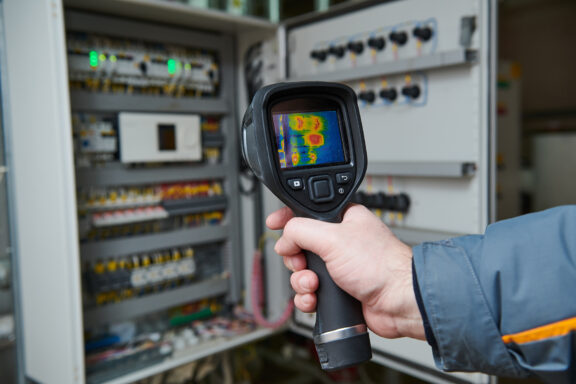
- Thermal imaging inspections to detect overheated connections and abnormal circuit paths.
- Protective relay coordination to isolate faulty equipment while maintaining upstream system stability.
- Routine inspection of connectors, bus systems, portable power equipment, and distribution assemblies exposed to vibration, moisture, or contaminants.
- Continuous monitoring of power distribution equipment operating in high-demand or mission-critical applications.
Conclusion
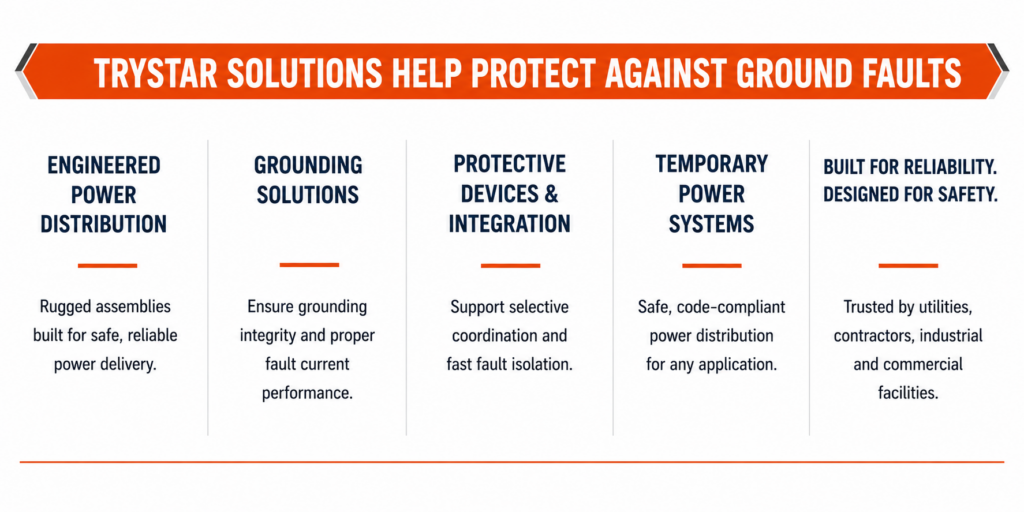
Trystar solutions help commercial and industrial facilities strengthen electrical system protection through engineered power distribution equipment, grounding solutions, and temporary power systems designed for demanding operating environments.
Integrated power distribution assemblies, cable management systems, and connection interfaces help facility personnel maintain electrical power system integrity in utility, construction, data center, healthcare, industrial, and other applications where electrical power reliability and resiliency are critical. Combined with preventive maintenance and properly coordinated protection systems, these solutions help facilities reduce downtime, improve operations, and support safer electrical infrastructure performance.

We Are Here
To Help
Our team is here to support you and solve your power challenges. Connect with our responsive experts today to learn about our customized power solutions and products.