As healthcare facilities integrate increasingly advanced, power-sensitive equipment and face growing external threats from extreme weather to cyberattacks, the stakes for uninterrupted electrical power have never been higher. Traditional utility-grid reliance continues to prove insufficient for the long-term future. In response, the healthcare sector is shifting toward resilient, flexible, and sustainable energy frameworks. This article examines four (4) major power-resiliency trends shaping North American healthcare facilities through 2026, discusses why these trends matter … and how Trystar’s offerings align with this evolution.
Onsite Power Generation, Microgrids & Energy Storage
Hospitals and healthcare campuses are increasingly deploying on-site generation, microgrids, and battery storage … thus moving beyond sole reliance on the traditional grid and standby gensets.1 These advanced energy solutions expand a healthcare facility’s ability to maintain critical operations during grid disruptions, ensuring patient safety and uninterrupted care. By integrating renewable energy sources and intelligent controls, hospitals can also optimize energy efficiency and reduce carbon emissions. Additionally, the adoption of microgrids and battery storage enhances resiliency, allowing facilities to respond swiftly to emergencies and fluctuating power demands.
Such microgrids give hospitals “islanding” capability, which enables full or partial facility operation even when the main grid fails.2 “Islanding” capability allows hospitals to disconnect from the main utility grid and operate independently using on-site resources. This autonomy ensures that essential medical equipment and life-support systems remain powered during widespread outages. As a result, hospitals can continue delivering critical services without interruption, safeguarding patient health and safety. Moreover, hybrid configurations (renewables + storage + backup genset/fuel cell) support both resilience and sustainability goals, often reducing long-term energy costs and environmental impact. By combining multiple energy sources, hospitals can balance reliable power supply with lower emissions and operational expenses, while also adapting to evolving regulatory and market conditions.
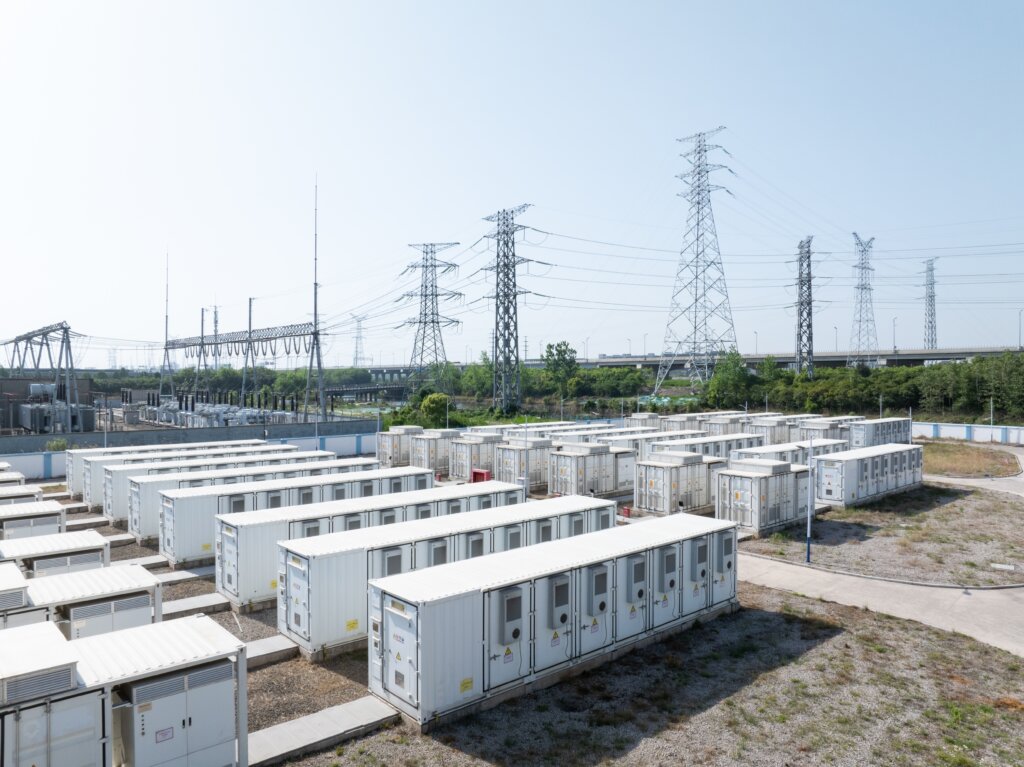
Battery Energy Storage Within A Utility Substation
Why this matters:
For hospitals and healthcare facilities, power interruptions are not just inconvenient … they are life-threatening. Microgrids and on-site storage are beginning to contribute to a more robust, diversified power backbone. From a utility/substation and facility infrastructure perspective, this means designing internal distribution, transfer switches, protection schemes, as well as monitoring and controls that accommodate multiple power generation sources, varied load profiles, and seamless transitions between grid-connected and islanded operation.

A fundamental shift is occurring in how hospitals and healthcare facilities are thinking about backup power … from “emergency only” to continuous, strategic resilience.
Climate- and Hazard-Resilient Infrastructure Design
Healthcare facilities are designing and retrofitting infrastructure with increasing recognition of climate-driven and hazard-related risks. Rising frequency of extreme weather events, coupled with an aging electrical grid, and an ever-present threat of cyber-attacks all demand that hospitals build resilient systems capable of maintaining operations under stress.
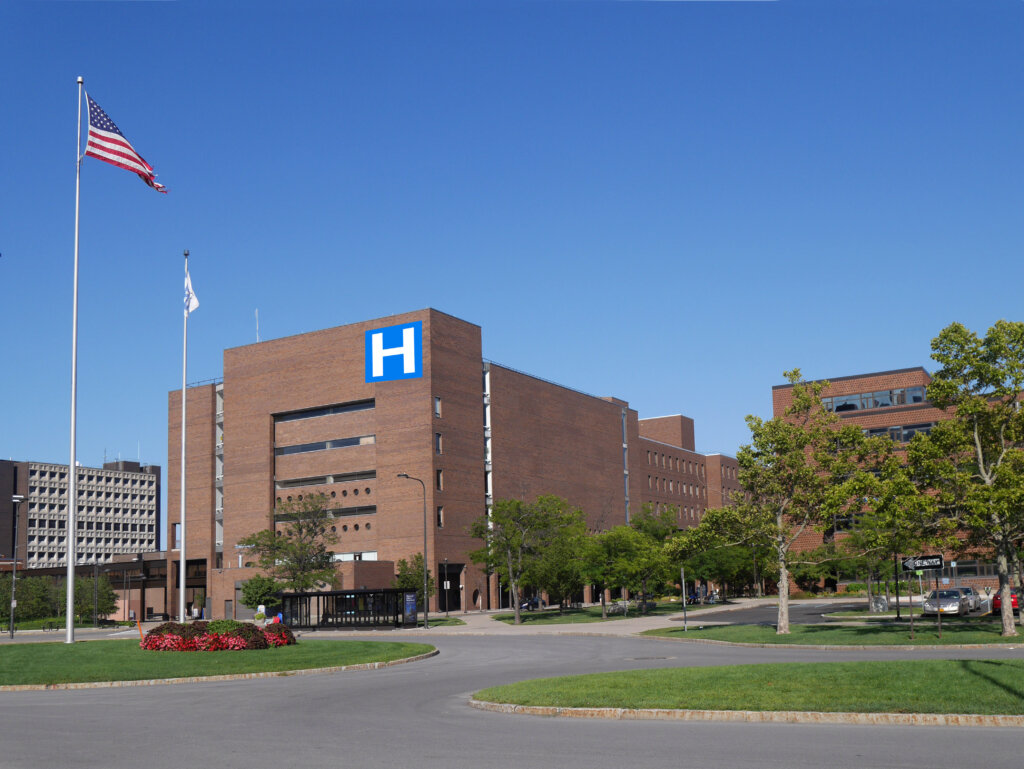
Example Hospital Campus
As noted in a recent Trystar blog article, many U.S. hospitals rely on aging infrastructures, sometimes over 50 years old, not engineered for today’s electrification and resilience demands.3 As a result, facility planning increasingly emphasizes redundancy, diverse generation and storage sources, as well as microgrid-enabled architectures that can “hold island” during prolonged grid disturbances. Planning teams evaluate a range of technologies to ensure that critical electrical loads receive uninterrupted power regardless of external disruptions. And as a result, they prioritize systems that can seamlessly transition between grid-connected and “islanded” modes to maintain continuous operations.
Additionally, healthcare providers are integrating “hybrid power + renewables“ not just for cost or sustainability, but as a direct response to risk … therefore ensuring that essential services remain operable through climate-related outages and any instability within the electrical infrastructure. Diversified energy systems combine multiple power sources (e.g., solar, wind, battery energy storage, and traditional generators) to create a more robust and flexible energy supply that reduces dependence on any single source. By proactively investing in diversified energy systems, hospitals and healthcare facilities strengthen their ability to withstand and recover from power disruptions.
Why this matters:
Hospitals and healthcare facilities must be resilient not only in design but in operation. For utilities and substations, this means anticipating higher peak and emergency loads, integrating backup sources, and planning switchgear and control logic that supports “hazard mode” operations … including the ability to isolate from an unstable grid and maintain power quality for sensitive medical systems.
Electrification & Energy-Efficiency Upgrades in Critical Infrastructure
As healthcare infrastructure advances and evolves, (including digital diagnostics, high-power imaging, data centers, electrified HVAC and ventilation, and electrified pumps), the facilities are increasing their internal electrical demand. To manage this, many healthcare facilities are adopting energy-efficient systems, optimizing load profiles, and deploying electrification where feasible … aligning these upgrades with resilience goals. In other words, they assess energy consumption patterns to identify opportunities for demand reduction and improved operational efficiency. By integrating smart controls and real-time monitoring, facilities can better balance energy use, anticipate peak loads, and ensure critical systems remain prioritized during disruptions.
Integrating renewables, storage, and microgrids helps manage not just emergency power needs but also supports the increased base load from electrification … thus making the facility’s power infrastructure more flexible, efficient, and sustainable. By reducing overall energy waste and improving efficiency, hospitals can offset some of the increased load from electrified systems, making their power budgets more predictable and also making their resilience investments more effective.
Why this matters:
As hospitals electrify more systems, the demand on the internal electrical infrastructure and external utility supply grows. Substations, distribution, transformer capacity, and internal switchgear must scale accordingly. For a company like Trystar, this trend represents growing demand for scalable, robust, and flexible power distribution solutions that can support expanding loads while ensuring reliability and enhancing emergency preparedness.
Increasing electrical loads mean that hospitals and healthcare facilities must rethink transformer capacity, power distribution architecture, switchgear design, and the scalability of their overall electrical power infrastructure.
Digital Monitoring, Predictive Maintenance, & Resilience Analytics
With more complex power architectures (e.g., microgrids, hybrid generation, storage, varying load profiles) also comes the need for intelligent operational management. The healthcare sector is increasingly adopting digital monitoring, Energy Management Systems (EMS), predictive maintenance, and analytics to ensure resilience and readiness. These technologies provide real-time visibility into system performance, enabling rapid identification and resolution of potential issues. Predictive analytics help anticipate equipment failures and optimize maintenance schedules, reducing downtime and operational risks. By leveraging advanced EMS platforms, healthcare facilities can automate energy distribution, prioritize critical loads, and adapt dynamically to changing conditions.
In many hospitals, the shift in responsibility for power quality and reliability from external utilities to internal facility managers, means adopting digital controls, automated transfer switching, power quality monitoring, and real-time load management to support sensitive medical equipment and guarantee uptime.4 Healthcare facility managers must now proactively monitor and manage electrical systems to prevent disruptions that could compromise patient care. This shift requires ongoing investment in staff training, advanced technologies, and robust protocols to maintain the highest standards of power reliability and safety.
Why this matters:
As healthcare power systems grow more complex, manual or legacy monitoring becomes insufficient. Digital EMS and analytics enable predictive maintenance, early detection of anomalies, load-shedding strategies, and efficient “islanding” … all of which are essential for electrical power resiliency and critical care continuity. For Trystar, this suggests opportunity to provide not just hardware (transformers, switchgear, and monitoring equipment), but integrated solutions that support monitoring, control, and future-proof scalability for healthcare customers.

Example Of An Energy Management System With Digital Monitoring
Why These 4 Trends Matter … And Where Trystar Fits
Healthcare facilities now demand more than just “backup power.” They require resilient, flexible, efficient, and future-proof electrical infrastructures that can support critical care with zero tolerance for outages, while adapting to evolving demands (electrification, renewables, sustainability).
Consider the following:
- As hospitals adopt microgrids and on-site generation, the internal substation and distribution infrastructure becomes more complex. Trystar’s healthcare solutions portfolio can supply the backbone for these electrical systems.
- With growing electrification and increased base loads, the capacity and reliability of distribution transformers and switchgear become critical; Trystar’s industrial-grade transformers and scalable solutions align with that need.
- As hospitals invest in digital EMS, components that support integration, monitoring, and control become vital … thus offering a pathway for Trystar to deliver the integrated, resilience-ready systems.
- Given the aging state of much of the North American hospital and healthcare electrical infrastructure and the surge of outage threats (weather, cyber, grid instability), the demand for comprehensive upgrades continues to increase. Trystar’s integrated healthcare solutions serve as the foundation of modern, resilient healthcare power systems.
As healthcare providers redesign their power strategies for the mid- to late 2020’s and beyond, they will require infrastructure partners capable of delivering reliability, scalability, and integration … and Trystar’s offerings align directly with those needs.
Hospitals and healthcare facilities should begin to connect “what’s happening” with “what they need to be investing in” … scalable, integrated, resilient electrical solutions.
Conclusion
In 2026, power resiliency in healthcare will no longer be an afterthought … it will be intrinsic to facility design, operation, emergency preparedness, and patient safety. Microgrids, on-site power generation, battery energy storage, electrification, and digital energy management are becoming standard, not optional. For utilities, electrical system designers, and healthcare facility managers, this represents a paradigm shift: hospitals are becoming critical nodes of distributed infrastructure … demanding robust, smart, and flexible electrical systems. By embracing this new mindset sooner rather than later, through investment in scalable, integrated solutions will ensure that healthcare facilities remain resilient, responsive, and ready for what the future continues to bring in electrical power resiliency. Connect with our team to begin these conversations!
________________________________________
References:
1 Microgrid Knowledge. “Healthcare Facilities and Hospitals: Microgrids Can Deliver Mission-Critical Energy”. July 17, 2025. https://www.microgridknowledge.com/microgrids/critical-services/article/55303922/healthcare-facilities-and-hospitals-microgrids-can-deliver-mission-critical-energy
2 Ibid.
3 Trystar. “The Unprecedented Power Resiliency Pressures Faced By Hospitals And Healthcare Facilities”. November 20, 2025. https://www.trystar.com/article/the-unprecedented-power-resiliency-pressures-faced-by-hospitals-and-healthcare-facilities/ As cited in ASHE’s “Healthcare Facility Management” Magazine, Hospital Operations Survey, December 15, 2024. https://www.hfmmagazine.com/results-2024-hospital-operations-survey-0
4 Microgrid Knowledge. “Healthcare Facilities and Hospitals: Microgrids Can Deliver Mission-Critical Energy”. July 17, 2025. https://www.microgridknowledge.com/microgrids/critical-services/article/55303922/healthcare-facilities-and-hospitals-microgrids-can-deliver-mission-critical-energy