Updated and re-published May 29, 2026.
Industrial facilities depend on reliable electrical power to sustain productivity, protect equipment, and maintain operational efficiency. Yet as manufacturing systems become increasingly automated and electronically complex, power quality issues have become a growing source of downtime, maintenance costs, and production instability. Voltage fluctuations, total harmonic distortion, and electrical noise can quietly undermine reliability or trigger sudden operational failures that directly impact profitability.
Industrial power quality is no longer simply a maintenance concern. It is a strategic operational priority that affects uptime, asset longevity, production consistency, and long-term competitiveness. Organizations that proactively address voltage regulation, power conditioning, and ride-through capability are better positioned to reduce costly disruptions and maximize operational performance.
Industrial power quality directly impacts manufacturing uptime, equipment reliability, and long-term profitability.
Understanding Industrial Power Quality
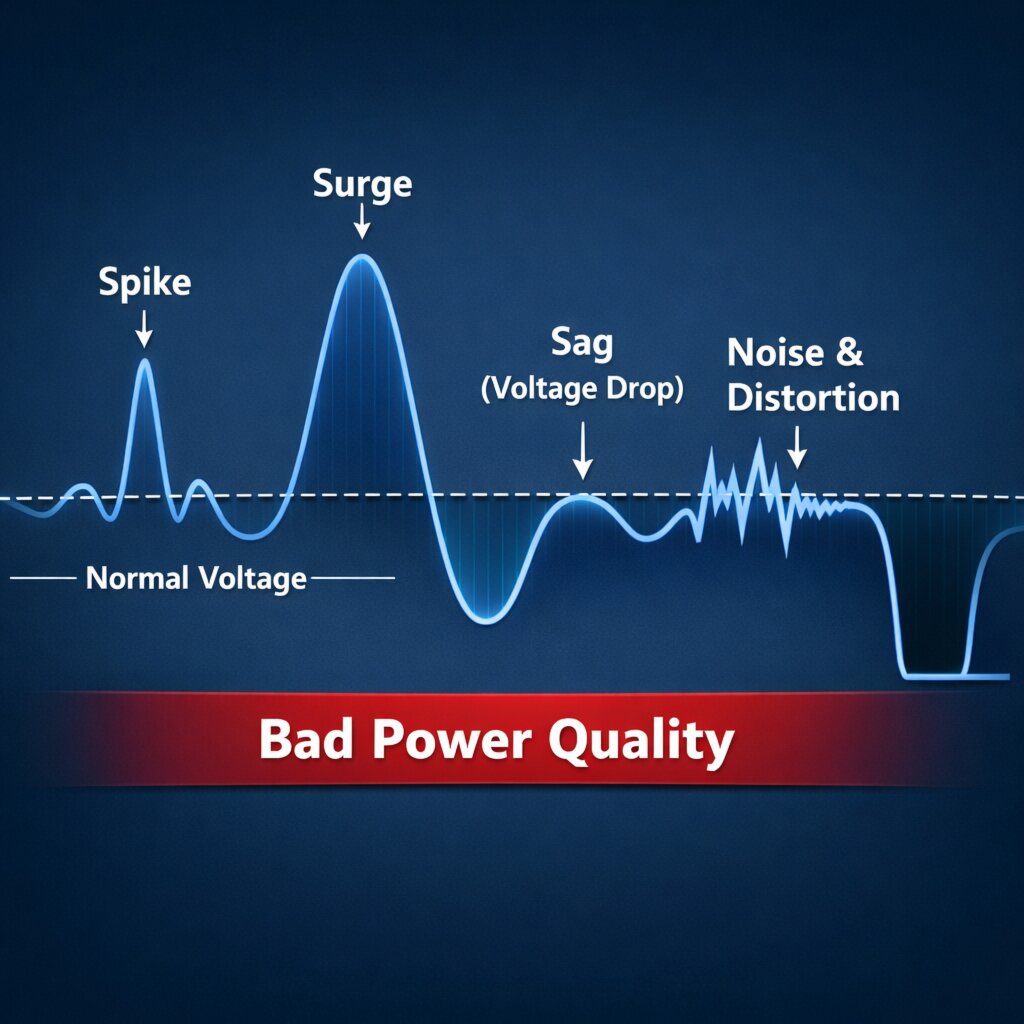
Industrial power quality refers to the stability, consistency, and cleanliness of electrical power supplied to equipment and systems within a facility. “Clean” power (illustrated by a true sine wave) enables machinery, automation controls, and sensitive electronics to operate within designed tolerances … while poor power quality introduces voltage fluctuation (including sags and surges) that can damage assets and interrupt operations.
Given the complexity of modern industrial operations, even minor disturbances in the electrical supply can have significant consequences. Automated production lines, robotics, process controls, and digital instrumentation all rely on stable electrical conditions to function reliably. Identifying and addressing power quality issues is crucial to minimizing downtime and protecting valuable equipment. Common industrial power quality problems include:
- Voltage fluctuations and sags
- Harmonic distortion from non-linear loads
- Electrical noise interference
- Momentary outages and transient disturbances
- Frequency instability
Effectively managing these power quality challenges is essential for maintaining productivity and safeguarding critical assets. By prioritizing power quality, industrial facilities can achieve greater operational efficiency, reduce maintenance costs, and ensure long-term reliability.
Voltage Regulation as the Foundation of Reliability
Voltage regulation plays a central role in maintaining power reliability in manufacturing environments. Industrial equipment is engineered to operate within specific voltage ranges, but real-world electrical systems frequently experience instability caused by utility events, motor starts, changing load demands, and switching operations. As a result, manufacturers must remain vigilant to the risks associated with unstable voltage. When voltage fluctuates outside acceptable tolerances, facilities may experience:
- Nuisance equipment trips
- Unexpected shutdowns
- Reduced motor efficiency
- Overheating of electrical components
- Increased maintenance requirements
- Premature equipment failure
Consistent voltage regulation minimizes these risks by stabilizing incoming power and maintaining reliable operating conditions across the facility. In harsh industrial environments (and especially those in which uptime directly affects profitability), stable voltage delivery becomes essential to sustaining production continuity and protecting critical assets.
Stable voltage regulation is essential for preventing equipment disruptions, reducing downtime, and maintaining reliable industrial operations.
Power Conditioning and Electrical Noise Mitigation
As industrial operations adopt more automation technologies, facilities increasingly rely on variable frequency drives, power electronics, programmable logic controllers, and digitally controlled systems. While these technologies improve efficiency and precision, they also generate harmonic distortion and electrical noise within the operation itself.
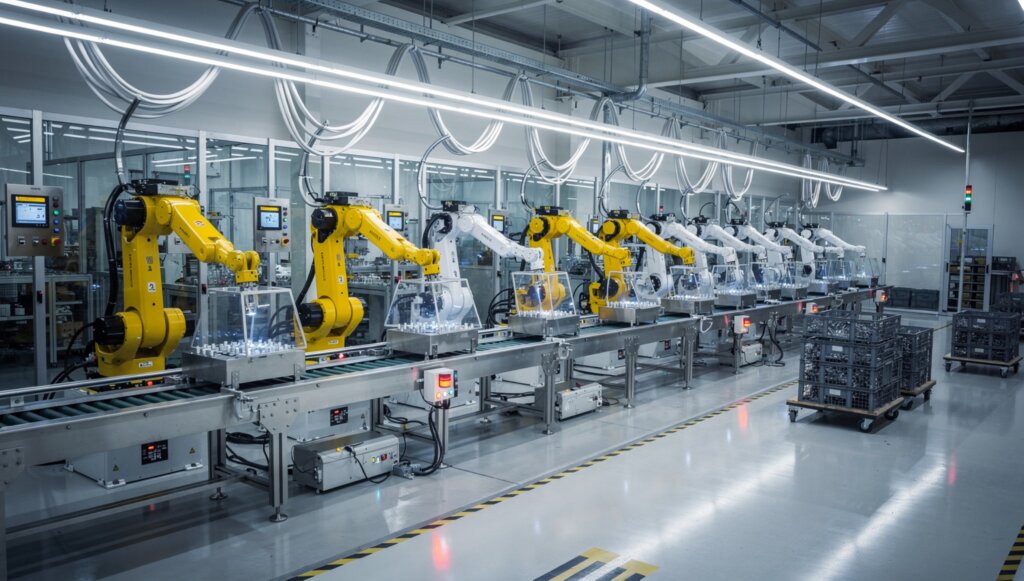
Example of robotics and factory floor automation, which both have the potential to generate harmonic distortion and electrical noise within the industrial application.
Harmonic distortion alters normal electrical waveforms, creating excessive heat in transformers, cables, and motors while reducing overall system efficiency. Electrical noise can interfere with instrumentation, communications, and control systems, leading to intermittent faults and difficult troubleshooting scenarios. Both harmonic distortion and electrical noise can accelerate equipment wear and increase maintenance costs over time. Left unaddressed, these power quality issues may also contribute to unplanned downtime and compromise product quality in industrial processes. Effective power conditioning strategies focus on:
- Electrical noise mitigation
- Harmonic filtering
- Waveform stabilization
- Isolation of sensitive loads
- Reduction of transient disturbances
Cleaner power improves system reliability, enhances automation performance, and supports consistent production quality. For facilities operating precision manufacturing processes, maintaining clean electrical power is essential to both operational efficiency and product consistency.
Ride-Through Capability and Operational Continuity
Many industrial power disturbances last only milliseconds, but even momentary interruptions can halt production processes, reset automation systems, or damage in-process materials. Restarting operations after a brief outage may require hours of recovery time, creating substantial production losses.
Ride-through capability refers to the ability of electrical systems and connected equipment to continue operating through short-duration voltage sags or temporary power interruptions without shutting down. This is critical in industrial settings where even brief interruptions can halt production lines and cause significant losses. By enhancing ride-through capability, facilities can improve operational resilience and reduce the risk of costly downtime. In harsh industrial environments, ride-through capability provides several operational advantages:
- Reduced downtime from momentary disturbances
- Improved process continuity
- Protection against production losses
- Greater resilience during utility switching events
- Reduced risk of equipment resets and control failures
Facilities that incorporate ride-through strategies into their power quality management approach are better equipped to maintain stable operations despite unpredictable grid conditions. By investing in technologies that enhance ride-through capability, organizations can minimize the impact of voltage sags and short-term interruptions on production processes. This proactive approach not only protects sensitive equipment but also supports continuous improvement initiatives. Robust ride-through strategies contribute to greater operational resilience and sustained profitability.
A Comprehensive Approach to Power Quality Management
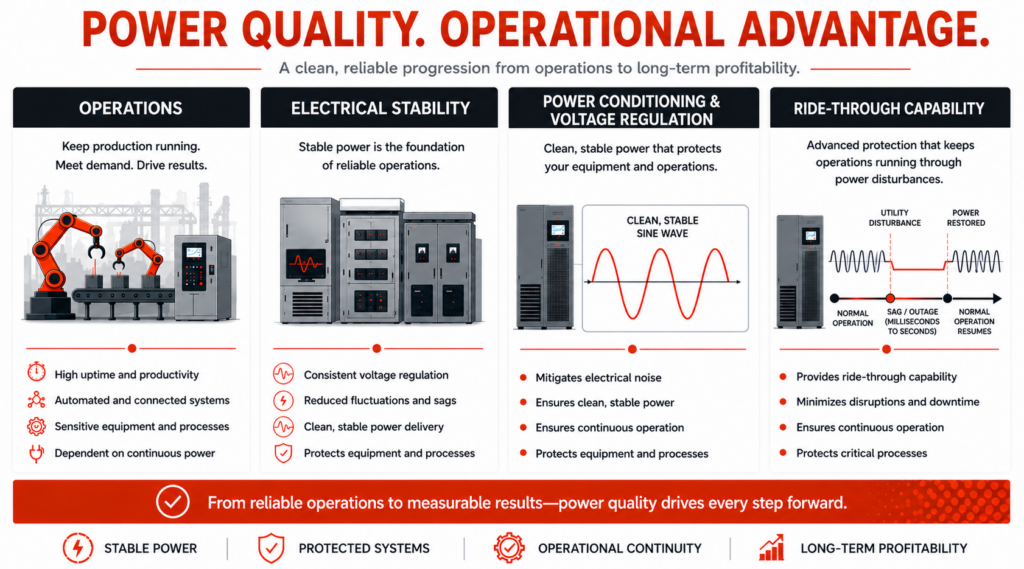
Voltage regulation, power purification, and ride-through capability work together as part of a broader industrial power quality management strategy. Addressing only one aspect of power quality often leaves facilities vulnerable to additional forms of electrical instability. A comprehensive approach ensures that all potential sources of disruption are identified and mitigated … thus reducing the risk of costly downtime and equipment damage. By integrating multiple solutions, facilities can achieve a higher level of reliability and optimize overall operational performance.
A comprehensive approach helps organizations:
- Improve operational uptime
- Extend equipment lifespan
- Reduce maintenance costs
- Improve energy efficiency
- Increase manufacturing reliability
- Protect sensitive automation systems
- Reduce costly production interruptions
As industrial systems continue evolving toward greater automation and digital integration, power quality management will play an increasingly important role in sustaining reliable operations and maximizing profitability. Facilities that proactively invest in advanced power quality solutions will be better positioned to adapt to emerging technologies and competitive pressures. A strong commitment to power quality management supports long-term growth, operational excellence, and industry leadership.
Conclusion
Industrial power quality is a critical factor that shapes operational reliability, production consistency, and long-term profitability. By proactively managing voltage regulation, mitigating electrical noise, addressing harmonic distortion, and enhancing ride-through capability, facilities can minimize downtime and optimize system performance.
In today’s competitive manufacturing landscape, reliable power is not just a utility requirement … but a strategic asset that underpins efficiency and protects critical infrastructure. Organizations that invest in comprehensive power quality management are better equipped to adapt to technological advancements and industry demands. This commitment leads to reduced maintenance costs, greater operational resilience, and sustained profitability.
Prioritizing power quality empowers manufacturers to achieve operational excellence and maintain a decisive edge in the marketplace.
Take the next step toward operational excellence by evaluating your facility’s power quality management strategy today. Let’s start the conversation … invest in proven solutions to safeguard your assets, reduce downtime, and unlock greater profitability for your organization.