Poor power quality is rarely the result of a single failure or isolated disturbance. In most industrial and commercial facilities, power quality issues develop gradually as electrical systems operate beyond their original design assumptions. Voltage deviations, harmonic distortion, transient disturbances, and load imbalances often emerge over time as facilities add equipment, increase production capacity, and rely more heavily on non‑linear loads. Long before an outage occurs, poor power quality begins to erode electrical system performance, reduce production efficiency, and increase electrical stress across connected equipment. Understanding power quality as a system condition … not a one‑time event … is the first step toward long‑term electrical system reliability.
How Poor Power Quality Develops Over Time
Commercial and industrial power quality challenges frequently originate from the gradual evolution of electrical systems. Infrastructure that was originally engineered to support conventional loads may struggle to accommodate the demands of modern facilities … ones in which automation, advanced power electronics, and digitally controlled equipment and machinery are now commonplace. As digital processes become more sophisticated, the electrical network is subjected to a wider range of operating conditions and load profiles than initially anticipated. This mismatch between legacy design and current requirements can create vulnerabilities that manifest as persistent power quality issues.
Non-linear loads (e.g., variable frequency drives and high-efficiency power supplies) inject harmonic currents into the electrical system … thus distorting voltage waveforms and increasing the risk of resonance. Simultaneously, incremental increases in connected loads can push the system closer to its capacity limits, making it more susceptible to voltage sags, swells, and transient disturbances. Phase imbalances may also arise as equipment is added unevenly across current phases, further complicating system stability. These combined effects can challenge even well-maintained electrical networks.
Rather than causing immediate, catastrophic failures, these power quality disturbances tend to recur and accumulate over time. Repeated exposure to harmonics, voltage fluctuations, and transients accelerates the breakdown of insulation materials, elevates thermal stress on conductors and transformers, and gradually weakens critical system components. The resulting degradation often remains hidden until it reaches a tipping point, at which visible failures or costly downtime occur. By the time symptoms become apparent, significant damage to system reliability and equipment lifespans may have already taken place.
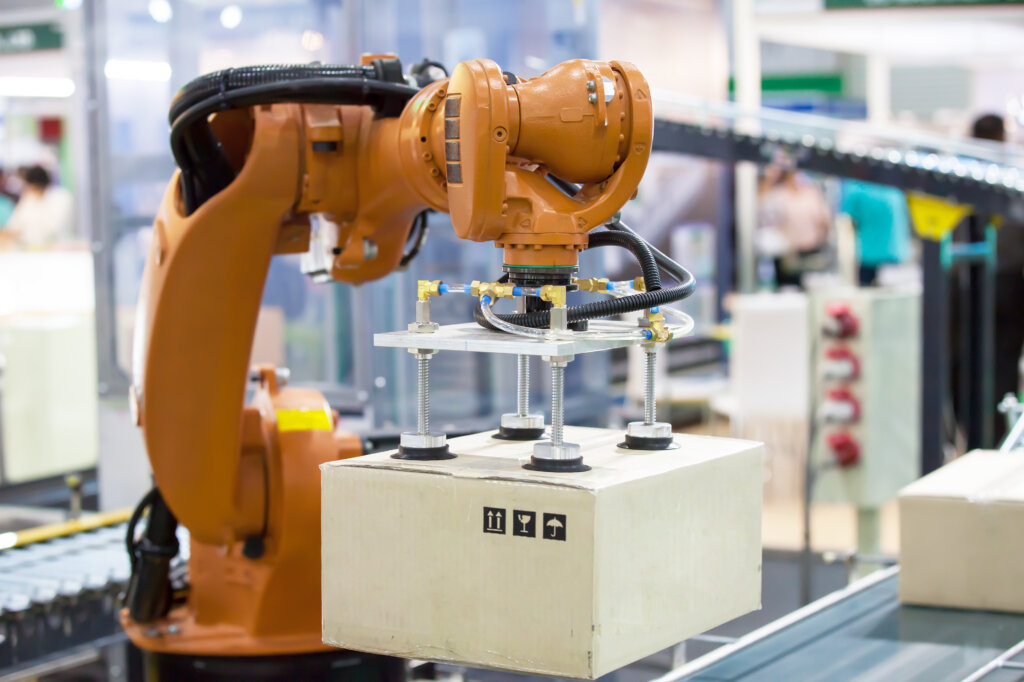
A robotic assembly line includes servo motors, which can inject significant harmonics into the industrial facility’s electrical system.
Power quality issues are cumulative and develop over time as systems evolve, making proactive management essential to preserving reliability and equipment longevity.
Early Indicators Of Power Quality Issues Are Often Overlooked
One of the greatest risks associated with poor power quality is the subtlety of its early warning signs. Initial symptoms (e.g., intermittent equipment resets, unexplained process interruptions, or minor data errors) are often sporadic and easily mistaken for unrelated issues. These minor problems can mask underlying electrical stress … and therefore allow problems to escalate unnoticed until they compromise critical operations. Without proactive monitoring and analysis, facilities may overlook these indicators, missing the opportunity to intervene before more severe consequences arise. Recognizing these early signs is essential, as they often precede a range of more significant power quality problems.

Example of a facility engineer monitoring electrical operations and overall system performance.
These symptoms, as noted above, are frequently treated as isolated maintenance problems. However, from an engineering perspective, they often indicate upstream power quality issues such as voltage deviations, harmonic loading, or transient disturbances. Addressing only the immediate symptoms such as resetting a tripped device or replacing failed components, may provide temporary relief but does not resolve the underlying cause. Over time, this reactive approach can lead to recurring failures, increased maintenance costs, and reduced equipment lifespan. A comprehensive power quality assessment is necessary to identify and mitigate the root causes, ensuring long-term system reliability and operational efficiency.
Without proper power quality monitoring, these conditions remain undocumented, allowing electrical stress to accumulate and shorten equipment life … and all the while system performance continues to decline. Over time, the lack of visibility into power quality disturbances can also hinder root cause analysis, making it difficult to implement effective corrective actions. This underscores the need for continuous monitoring to detect, diagnose, and address emerging power quality issues before they escalate into costly failures.
Why Reactive Fixes Fail To Resolve Poor Power Quality
When extended downtime eventually occurs, corrective actions typically focus on restoring operations as quickly as possible. Equipment is replaced, loads are re-routed, and protection settings are adjusted to bring systems back online with minimal delay.
However, these measures are often reactive and address only the symptoms of the failure, rather than its root cause. Without a thorough investigation into the underlying power quality conditions (e.g., voltage instability, harmonic distortion, or transient disturbances) the same vulnerabilities remain within the system. The result is a recurring, problematic cycle:
- Persistent power quality problems
- Rising equipment lifecycle costs
- Increased maintenance and replacement frequency
- Elevated operational and reliability risks
Reactive fixes treat the symptoms of poor power quality, but leave the underlying electrical system behavior unchanged. Over time, the cycle of temporary repairs and repeated failures can erode confidence in system reliability and increase operational costs. Without a comprehensive power quality management approach, achieving meaningful and long-term improvements in electrical system performance remains elusive.
Lasting reliability and performance can only be achieved by proactively addressing the root causes of power quality issues, rather than relying on reactive fixes that perpetuate costly cycles of failure and downtime.
The Solution: Engineering Power Quality Management into Electrical System Design
Effective power quality management begins during system planning, not after costly downtime has already occurred. By incorporating power quality considerations into the design and specification phases, engineers can anticipate potential disturbances and select appropriate mitigation strategies from the start. This proactive approach ensures that electrical infrastructure is robust, adaptable, and capable of supporting evolving operational demands without compromising reliability. Electrical infrastructure must be designed to support:
- Real‑world load profiles
- Non‑linear loads and harmonic content
- Future expansion requirements
- Environmental and operating conditions
- Increasing system complexity
Trystar supports this system‑level approach to power quality solutions by stabilizing incoming power with power conditioning transformers and voltage regulators … enabling effective load management through switchboards … maintaining continuity with transfer switches and docking stations … and providing visibility through power quality monitoring and controls.
By engineering power quality into the electrical system from the start, commercial and industrial facilities reduce unplanned downtime, protect critical assets, and improve long‑term electrical system performance. This strategic approach not only safeguards sensitive processes and extends equipment lifespans, but also supports sustained operational efficiency and cost savings over the life of the facility.
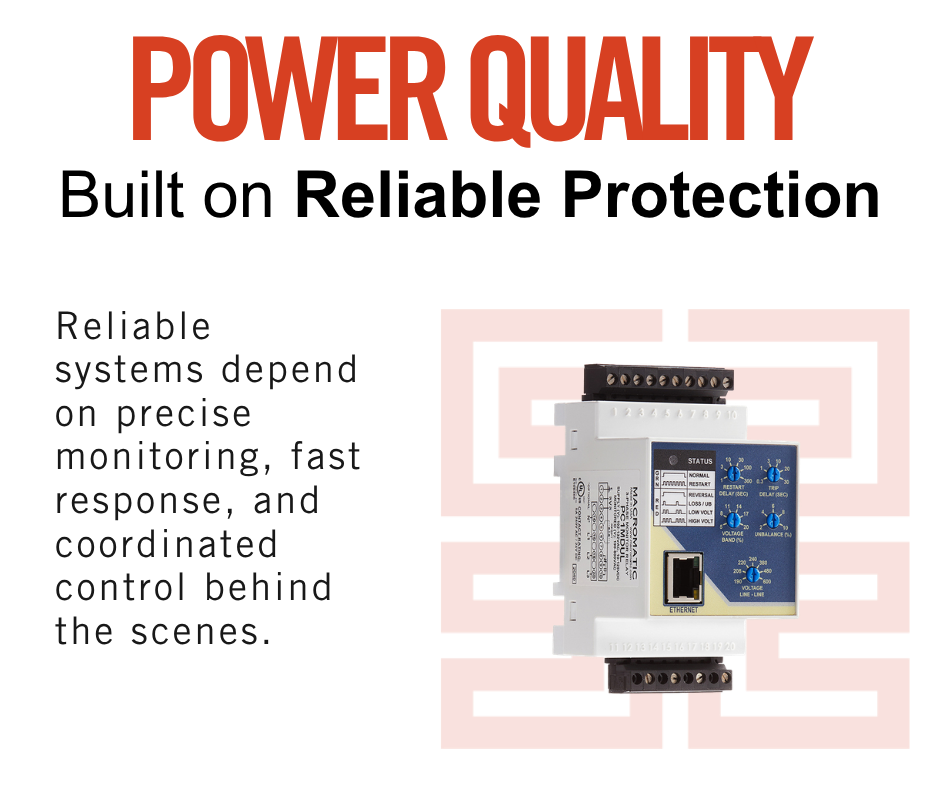
Trystar’s phase monitoring relays protect against under- and over-voltage conditions, as well as phase loss / reversal.
Integrating power quality management into electrical system design from the outset is the most effective way to ensure lasting reliability, protect valuable assets, and achieve long-term operational and financial success.
Conclusion: Better Electrical System Performance Starts with Power Quality
Poor power quality is not a random event … it is a cumulative condition that develops when electrical systems operate beyond their original assumptions. Designing for real‑world operating conditions and future performance ensures that power quality is built into the electrical system rather than addressed after failure. The result is improved reliability, lower lifecycle costs, and greater operational confidence. Better system performance starts today. Trystar delivers power quality solutions engineered for real‑world conditions and long‑term reliability.
Let’s start the conversation! Partner with Trystar to proactively safeguard your operations. Connect with our experts today for custom-engineered power quality solutions that future-proof your facility, maximize uptime, and give you the confidence to meet tomorrow’s challenges head-on.