Power distribution safety failures rarely occur as sudden, isolated events. In most cases, they develop over time due to electrical distribution system design gaps, improper equipment selection, undocumented system changes, or deferred maintenance. As electrical systems grow more complex and load profiles continue to evolve, even minor oversights can escalate into serious safety hazards that threaten personnel, equipment, and operational continuity. Regulatory compliance alone is not enough to ensure safety. Power distribution systems must be engineered, installed, and maintained with a deep understanding of electrical behavior across the full lifecycle of the system.
Modern facilities demand power systems that can safely handle higher fault currents, tighter operating margins, and more frequent reconfiguration. Without proper engineering controls, these demands increase exposure to arc flash events, thermal failures, and equipment damage. Addressing the most common power distribution safety concerns requires a disciplined, technical approach rooted in system-level planning, accurate load analysis, and engineered corrective solutions.
Organizations that treat power distribution safety as a lifecycle discipline rather than a reactive task are better positioned to reduce risk and improve long-term reliability.
This article defines the 5 most common power distribution safety concerns, and identifies the corrective measures for each, including:
- Inadequate grounding and bonding
- Overloaded or improperly rated equipment
- Unsafe cable management terminations
- Lack of proper labelling and arc flash identification
- Deferred maintenance and aging infrastructure
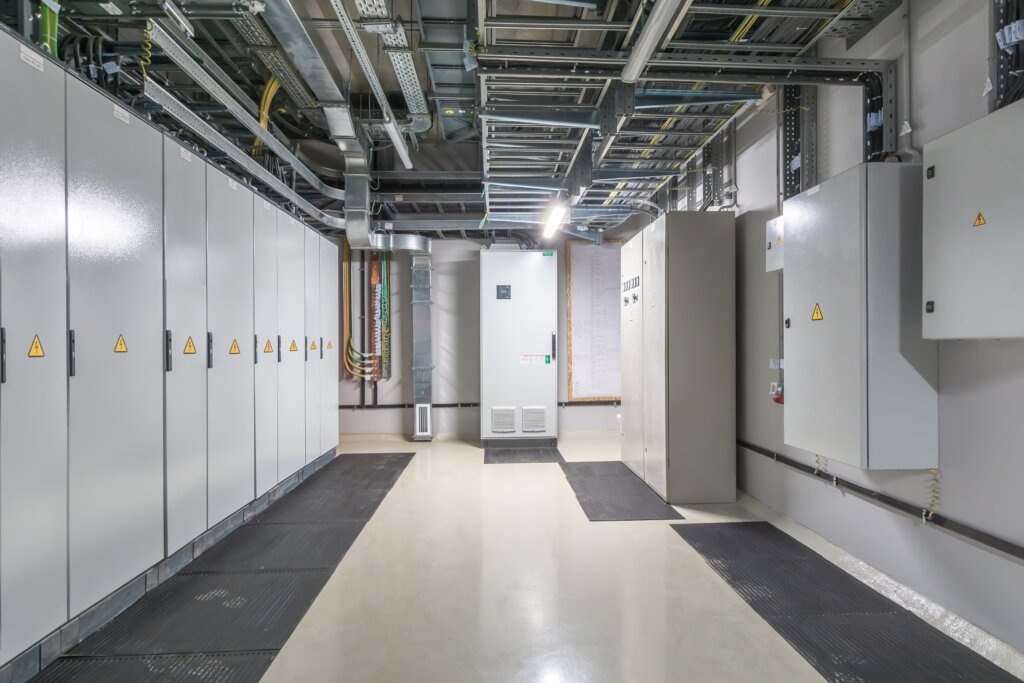
Example of a facility’s electrical room and a modern power distribution system.
1. Inadequate Grounding And Bonding
Inadequate grounding and bonding constitute some of the most critical and frequently misunderstood safety concerns within power distribution systems. The absence of required grounding conductors, the use of equipment grounding conductors that are undersized relative to fault current requirements, or the presence of disconnected bonding paths can severely compromise the system’s ability to safely conduct fault current back to its source. When the intended low-impedance path for fault current is interrupted or insufficient, protective devices such as circuit breakers and fuses may not detect or clear faults promptly. This failure can result in enclosures, conduit, and other exposed conductive components remaining energized at dangerous voltage levels, thereby creating a latent hazard for personnel and increasing the likelihood of accidental contact with live parts.
The consequences of deficient grounding and bonding are far-reaching, significantly elevating the risk of electric shock, arc flash events, and extensive equipment damage. In the context of temporary or mobile power systems, grounding issues are particularly prevalent due to the transient nature of installations, variability in site conditions, and the frequent dependence on field-assembled grounding arrangements that may not adhere to best practices or code requirements. Over time, factors such as corrosion of grounding electrodes, mechanical stresses from repeated assembly and disassembly, or undocumented alterations to the grounding system can further erode the effectiveness of grounding and bonding measures. These vulnerabilities underscore the need for routine inspection, testing, and documentation of grounding systems to ensure ongoing compliance and to maintain a high standard of electrical safety throughout the operational life of the installation.
Corrective Action:
Correcting grounding and bonding safety concerns requires system-level engineering rather than isolated fixes. Grounding schemes must be designed to align with system voltage, fault current levels, soil resistivity, and equipment configuration. Continuous grounding paths, properly bonded enclosures, and correctly sized conductors are critical to ensuring fault currents clear quickly and safely. Verification through testing and inspection must be integrated into commissioning and ongoing maintenance programs.
Trystar supports corrective grounding efforts by engineering electrical power distribution solutions with grounding and bonding designed into the system from the start. Trystar’s custom-built docking stations, switchboards, power distribution centers, and portable power solutions are engineered to meet applicable NEC, UL, and IEEE grounding requirements. By providing integrated grounding designs, documented connection points, and factory-tested assemblies, Trystar helps customers reduce field errors and improve grounding reliability across the lifecycle of the power system.
2. Overloaded or Improperly Rated Equipment
Operating power distribution equipment beyond its rated capacity remains a pervasive and hazardous safety problem, especially in environments where electrical loads increase incrementally over time without corresponding system upgrades. When conductors, circuit breakers, and busbars are subjected to currents exceeding their design specifications, they experience elevated thermal stress. This excessive heat accelerates the degradation of insulation materials, compromises dielectric strength, and can lead to insulation failure or conductor damage. Furthermore, equipment that lacks adequate interrupting capacity for the available fault current is at heightened risk during short-circuit conditions. Such equipment may fail catastrophically, as it is unable to safely interrupt or contain the energy released during a fault, thereby exposing personnel and assets to severe hazards including arc flash, fire, and equipment fragmentation.
The root causes of this safety concern frequently trace back to outdated or inaccurate load calculations, undocumented modifications such as the addition of new equipment, or an overreliance on manufacturer nameplate ratings … without accounting for actual site conditions. Critical operational variables (e.g., ambient temperature that affects conductor ampacity, duty cycle which influences thermal buildup, harmonic distortion that increases RMS current and heating, and diversity factors that impact simultaneous loading) are often overlooked in system assessments. When these real-world factors are ignored, electrical systems may appear compliant based on theoretical calculations or documentation, yet operate close to or beyond their safe operating limits. This disconnect between design assumptions and operational realities underscores the need for continuous load monitoring, periodic system reviews, and engineering judgment to ensure ongoing safety and reliability.
Corrective Action:
Mitigating overload and rating concerns begins with accurate load studies and short-circuit analysis. Engineers must evaluate both present and future demand … thus accounting for peak conditions and expansion scenarios. Equipment selection should include adequate thermal margins and interrupting ratings that exceed calculated fault levels. Proactive capacity planning reduces reliance on emergency modifications that introduce safety risks.
Trystar provides engineered power distribution systems that address load management and scalability from the outset. Through custom-designed, UL 891 Listed switchboards and additional power distribution solutions, Trystar helps customers align equipment ratings with actual operating conditions. Additionally, Trystar’s broad range of power testing load banks prevents overloaded or improperly rated equipment integration by applying a controlled, measurable electrical load that safely verifies system capacity before real-world operation. In summary, Trystar collaborates with customers to design systems that safely support current loads while allowing for future growth … reducing the risk of overload-related safety concerns.
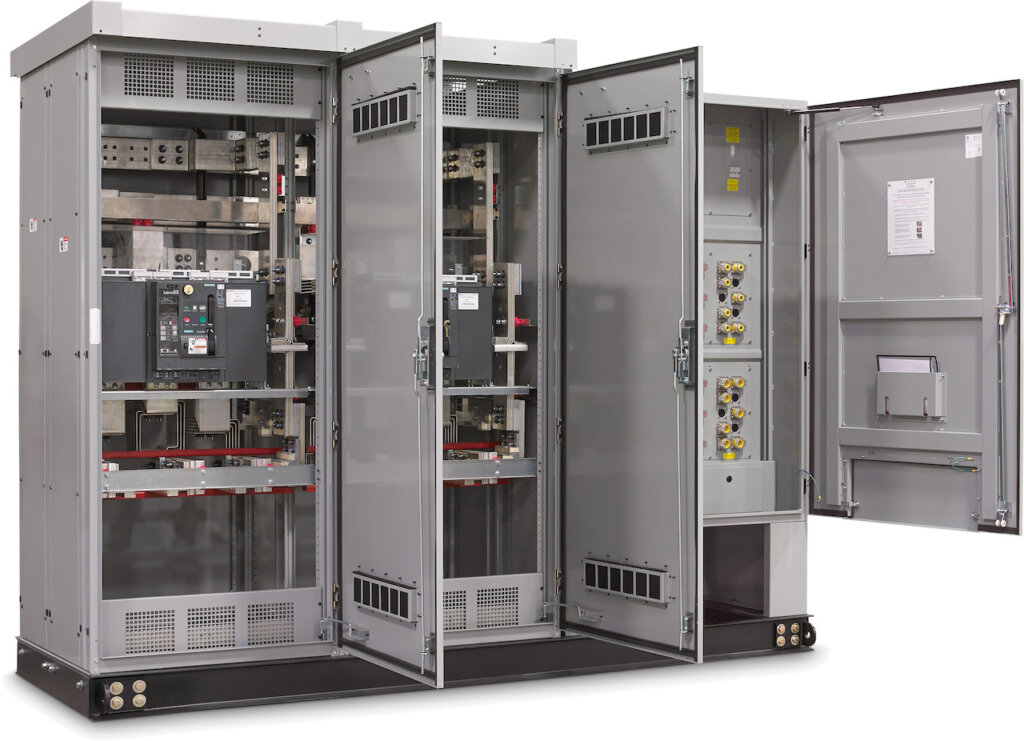
Trystar’s customizable UL 891 Listed low voltage switchboard.
3. Unsafe Cable Management and Terminations
Improper cable management and substandard termination practices are significant contributors to electrical system failures and safety incidents. When conductors are subjected to excessive bending radii, mechanical stress, or lack of adequate support, the physical integrity of the cable is compromised. Damaged cable insulation exposes conductive elements and increases the risk of short circuits and ground faults. Additionally, terminations that are not tightened to the manufacturer’s specified torque values can result in loose or high-resistance connections. These high-resistance points act as localized heat sources under load, which can accelerate conductor oxidation, degrade insulation, and lead to thermal runaway, arcing, or fire. In high-current circuits, even marginal increases in connection resistance can cause substantial temperature rises, amplifying the risk of catastrophic failure.
Field-installed cable routing is especially susceptible to variability and degradation due to inconsistent installation practices, environmental influences, and limited opportunities for thorough inspection. Differences in installation skills, adherence to best practices, and the use of non-standardized routing methods can result in uneven cable support, improper separation of power and control circuits, and inadequate protection from physical or chemical hazards. Environmental factors such as moisture, temperature fluctuations, and exposure to corrosive substances further accelerate cable deterioration. When standardized procedures for cable routing and termination are not enforced, the system’s maintainability and predictability are compromised … therefore creating difficulty to identify and address emerging issues before they escalate into safety hazards or operational disruptions.
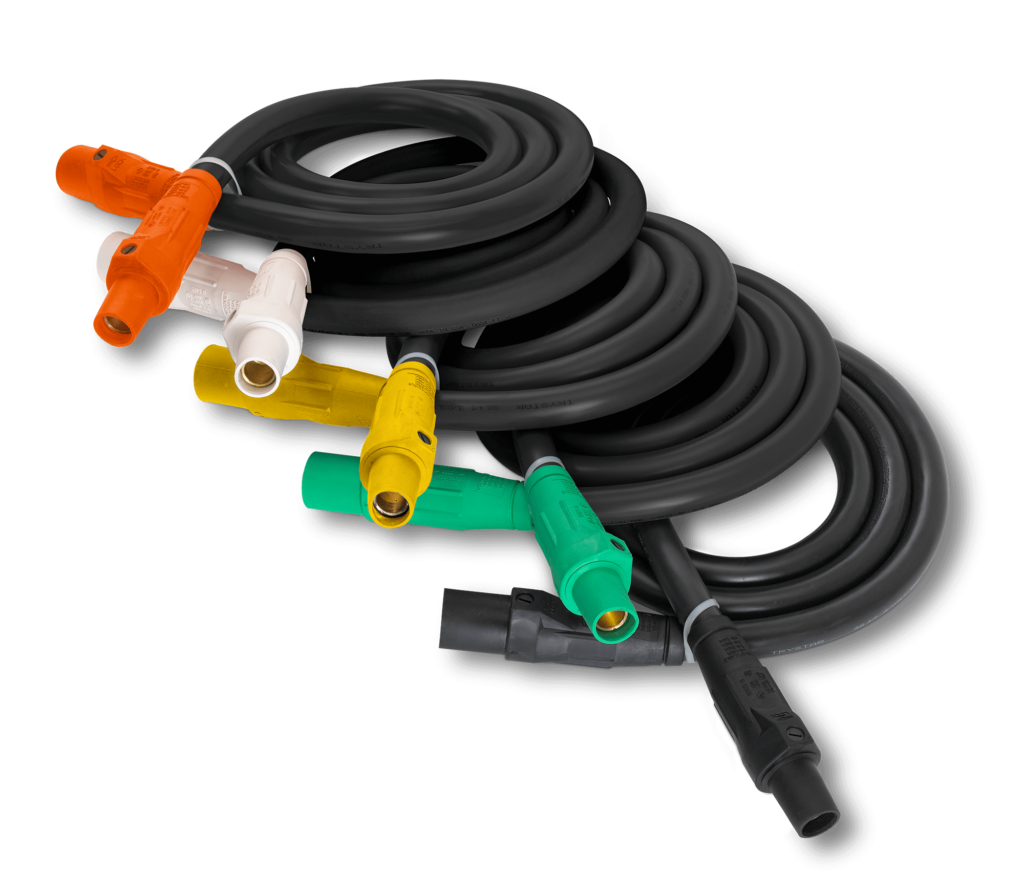
Examples of Trystar power cables.
Corrective Action:
Corrective measures require adherence to manufacturer specifications and code requirements for cable support, spacing, and bend radius. Terminations must be installed using proper tools, and then verified through torque testing during commissioning and/or maintenance. Clear routing paths and physical protection reduce mechanical stress and simplify future system modifications.
Trystar addresses these challenges by providing engineered cable assemblies and integrated distribution solutions that reduce field-installed complexity. Factory-built cable sets, clearly defined termination points, and documented connection requirements help ensure consistency and reliability. By minimizing on-site improvisation, Trystar improves both safety and long-term system performance.
4. Lack of Proper Labeling and Arc Flash Identification
Missing or inaccurate labeling within power distribution systems poses a substantial hazard to personnel engaged in installation, maintenance, or troubleshooting activities. The absence of clear voltage ratings, source identification, and up-to-date arc flash hazard information impedes a technician’s ability to accurately assess electrical risks. Without this critical data, workers may inadvertently select inappropriate personal protective equipment (PPE), misapply lockout/tagout (LOTO) procedures, or fail to isolate the correct circuit … thereby increasing the likelihood of electrical shock, arc flash exposure, or unintentional equipment energization. Outdated arc flash labels can be particularly problematic, because modifications to system configuration, load profiles, or protective device settings can significantly alter incident energy levels. These changes are not always visually apparent, making reliance on obsolete labels a serious safety concern.
Labeling deficiencies frequently arise when electrical systems undergo modifications (e.g., equipment upgrades, adding new loads, or reconfiguring power sources) without corresponding updates to documentation and labeling. As a result, the original safety labels may no longer accurately reflect the current system conditions … therefore leading to a disconnect between documented hazards and actual risks present in the field. This lack of alignment exposes personnel to unanticipated dangers, undermines the effectiveness of established safety protocols, and complicates compliance with regulatory requirements. To mitigate these risks, it is essential to implement rigorous change management processes that ensure all labeling and documentation are promptly revised to reflect any alterations in the electrical system.
Corrective Action:
Effective correction requires integrating labeling into both system design and lifecycle management (Services solutions). Arc flash studies must be performed using current system data, and labels must be updated whenever system parameters change. Clear, durable labeling supports safer maintenance practices and improves compliance with safety standards.
Trystar supports safer labeling practices by delivering power distribution solutions with clearly identified equipment, standardized naming conventions, and documentation that supports accurate arc flash analysis. By partnering with customers early in the design process, Trystar helps ensure systems are configured in ways that support safer operating conditions and clearer hazard identification.
5. Deferred Maintenance and Aging Infrastructure
Deferred maintenance represents a persistent and significant safety risk within power distribution systems. As critical components such as circuit breakers, protective relays, and insulation materials age, their performance and reliability degrade. Mechanical wear can impair the operation of switching devices, leading to delayed or incomplete fault clearing. Insulation breakdown (compounded by thermal cycling, moisture ingress, or chemical exposure) increases the risk of dielectric failure and electrical faults. Corrosion of conductive elements and terminations further elevates contact resistance … thus contributing to localized heating and potential fire hazards. The continued use of obsolete or end-of-life components undermines the coordination and selectivity of protective devices, reducing the system’s ability to isolate faults effectively and protect both personnel and equipment during abnormal operating conditions.
Facilities that rely on legacy power distribution infrastructure frequently encounter challenges in maintaining system integrity due to the scarcity of compatible replacement parts and the obsolescence of original equipment. As manufacturers discontinue support for older components, sourcing suitable replacements becomes increasingly difficult, often resulting in extended periods of deferred maintenance. This gradual accumulation of unresolved safety issues can remain undetected until a critical failure occurs, typically under fault conditions when the system is subjected to maximum electrical and mechanical stress. Emergency repairs conducted in such high-risk scenarios expose personnel to heightened danger and can lead to prolonged operational downtime, increased costs, and further compromise of system safety. Proactive maintenance strategies, including regular inspection, testing, and timely replacement of aging components, are essential to mitigate these risks and ensure the ongoing reliability and safety of power distribution systems.
Corrective Action:
Correcting deferred maintenance issues requires a proactive, lifecycle-based strategy. Regular inspection, testing, and condition monitoring help identify degradation before it results in failure. Planned equipment upgrades and system modernization reduce dependence on aging components and improve overall safety margins.
Trystar supports lifecycle maintenance and modernization efforts through engineered retrofit solutions, custom power distribution equipment, and comprehensive field services. By offering preventive maintenance programs, on-site inspections, and expert troubleshooting, Trystar ensures that power distribution systems remain safe, reliable, and compliant throughout their operational life. Trystar designs solutions that seamlessly integrate with existing infrastructure, enhancing both safety and performance while facilitating the transition away from high-risk legacy equipment. With a strong emphasis on custom-engineered solutions for any industry and proactive service offerings, Trystar enables safer operation, improved system reliability, and reduced long-term risk across every phase of the power distribution lifecycle.

Example of an electrician performing field maintenance on a power distribution system.
Conclusion
Power distribution safety concerns are rarely the result of a single error; they often stem from inadequate electrical distribution system design. These safety concerns reflect systemic issues in how power systems are designed, expanded, and maintained over time. Addressing these issues requires a technical, lifecycle-focused approach that prioritizes safety alongside performance and scalability.
Through engineered power distribution solutions, technical expertise, and lifecycle support, Trystar helps organizations correct safety issues and build safer, more resilient power systems. By embedding safety into every stage of the power distribution lifecycle, Trystar supports reliable operation while protecting the people who daily depend on these systems.
Contact Trystar today to begin the conversation … discover how our custom-engineered solutions and expert services can elevate the safety, reliability, and resilience of your power distribution systems!