In mission critical environments such as hospitals, high-rise residential buildings, manufacturing facilities, data centers, and emergency response hubs, the reliability of electrical power is much more than a matter of convenience. It can be a matter of life and death. In an electrical power outage, more than just the lights go out … so can safety systems, medical devices, communication networks, and the very infrastructure that protects human life. Reliable power is not merely about operational continuity; it is an essential bulwark that ensures the safety and wellbeing of occupants during both normal operations and in emergencies.
Trystar understands that in these high-stakes environments, any lapse in electrical service can have catastrophic consequences. That’s why our electrical power solutions are engineered to provide seamless, code-compliant backup and redundancy … thus giving facility managers and safety operations personnel the confidence that life safety related systems will remain operational when they are needed most. By integrating advanced, resilient electrical solutions into mission critical facilities, Trystar helps bridge the gap between utility power and uninterrupted power.
This article explores five (5) compelling reasons for integrating life safety solutions into not just what one would define as mission critical businesses, but also into commercial and industrial facilities … any location where the element of human life might be at stake.
1. Ensuring Occupant Safety
In emergencies where electrical power outages occur (regardless of whether caused by severe storms, grid failures, or internal equipment faults) occupant safety is of primary importance. Human life safety depends on the uninterrupted function of emergency lighting, fire alarms, exit signage, and communication systems. Imagine for a moment, being in an internal room without windows … or in a stairwell or an elevator … or in a restroom stall. Even a brief lapse of electrical power can cause confusion, panic, and the increased risk of injury. Reliable emergency power ensures safe egress, effective communication, and the continuity of life-protecting systems.
Ensuring occupant safety in any facility requires a robust approach to the continuity of critical life safety systems during power disruptions. Technical strategies focus on integrating redundant power sources, emergency backup power, automatic transfer switches, and real-time system monitoring to guarantee that emergency infrastructure remains fully operational. This proactive engineering not only supports compliance with stringent safety codes but also significantly reduces the likelihood of hazardous conditions arising from unexpected outages, thereby safeguarding occupants and enabling efficient emergency response.
Trystar’s electrical power conversion and power distribution solutions are designed to keep these life safety systems operational, no matter what the circumstances. Our solutions provide instant, dependable power transfer, ensuring that emergency lights illuminate, elevator doors open, and all safety-critical systems remains operational for emergency egress. This immediate continuity of service not only complies with life safety standards and electrical codes … it actively protects lives.

Example of residential and commercial office towers in which occupant safety is imperative during electrical power disruptions.

Occupant safety depends upon the guarantee that critical life-safety systems stay running without interruption during any power outage.
2. NEC 700.3(F) Compliance
Electrical reliability is a fundamental requirement for life safety. In facilities such as data centers, hospitals, high-rise buildings, and in public safety operations, critical electrical systems must remain online, uninterrupted, and operational to protect occupants and to maintain essential functions. Transfer switches and compliance with the National Electrical Code’s (NEC) Section 700.3(F) compliance, play crucial roles in ensuring uninterrupted power availability during any electrical utility outages or maintenance efforts.
NEC 700.3(F) requires provisions for maintaining emergency power systems, without compromising safety … specifically, and in simple terms:
- Temporary Source Connection:
If a facility’s emergency system relies on a single alternate source of power or that emergency source (generator) is offline for maintenance, the facility must provide a means to connect a temporary alternate source.
- Safety Assurance:
The transfer of power to the temporary alternate source must be such that critical life safety loads (e.g, egress lighting, fire alarms, etc) remain protected and operational when the primary emergency power source is out of service, such as during maintenance or power outages.
- Permanent Hardware:
NEC mandates an approved means of switching / transfer (e.g., a transfer switch with a dedicated connection point) that allows the temporary power connection without removing permanent wiring or using any improvisation. Practically speaking, this usually means installing a UL listed transfer switch or docking station that allows a portable generator to be safely tied-into the emergency power distribution system.
NEC 700.3(F) represents more than a regulatory requirement; it establishes a critical safeguard for occupant safety during periods of vulnerability. Proper selection, installation, and usage of transfer switches and docking stations ensure not only code compliance, but also demonstrate leadership in and adherence to best practices in safety, reliability, and preparedness.
In the event of a power outage, facilities equipped to maintain emergency systems in accordance with NEC 700.3(F) provide the assurance that life safety functions will remain dependable when they are needed most.
3. NFPA 101 Section 7.9.3 Compliance
The National Fire Protection Association’s “NFPA 101 Life Safety Code”, specifically Section 7.9.3, outlines strict requirements for emergency lighting systems, including their power source, runtime, and operational performance during outages. Compliance is not just a legal obligation … it is a life safety imperative that ensures building occupants have adequate visibility for safe evacuation.
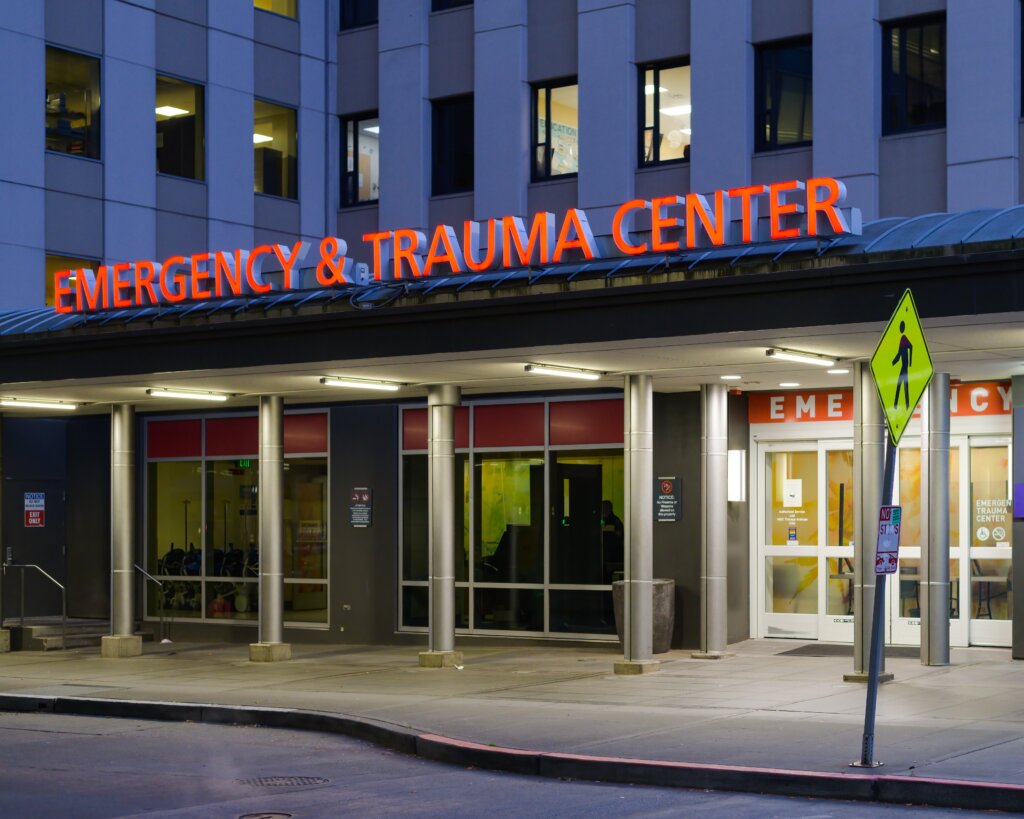
A typical hospital … one of many types of facilities that require fail-proof life safety solutions during electrical power disruptions.
Going even deeper into the electrical code, compliance with NFPA 101 Section 7.9.3.1.3 is essential for ensuring that emergency lighting systems deliver reliable, uninterrupted illumination in the event of a power outage. This section mandates specific performance criteria for emergency lighting, including automatic activation, minimum runtime, and sufficient light levels to support safe occupant egress … with or without the inclusion of a backup generator. Adhering to these technical requirements not only reduces the risk of injury and confusion during emergencies but also demonstrates a facility’s commitment to best practices in life safety engineering. Compliance with this standard is a critical component of a comprehensive risk management strategy, supporting both regulatory adherence and the protection of building occupants.
Trystar’s electrical power solutions are built with NFPA compliance in mind. Our engineered backup power systems and temporary power distribution equipment can be integrated to meet or exceed the runtime and performance standards outlined in Section 7.9.3; and especially compliance with Section 7.9.3.1.3. By offering dependable, code-compliant solutions, Trystar empowers consulting / specifying engineers and facility managers to maintain safety certifications while guaranteeing that their emergency lighting systems will function flawlessly during a crisis.
4. Risk Management And Mitigation
Every facility faces a spectrum of potential threats, from natural disasters to equipment malfunctions … and the key to reducing the impact of such threats lies in proactive risk management. Inadequate or unreliable emergency power dramatically increases the risk to human safety, operational continuity, and compliance.
Robust risk management and mitigation strategies are fundamental to maintaining operational resilience and safeguarding occupant safety in complex facility environments. Technically, this involves the systematic identification, assessment, and prioritization of potential hazards, followed by the implementation of engineered controls (e.g., reliable backup power systems) that address vulnerabilities before they escalate into critical failures. By integrating adaptive technologies and rapid response solutions, organizations can ensure continuity of essential services, minimize the likelihood of regulatory non-compliance, and protect both human and physical assets from the cascading effects of electrical disruptions.
Trystar helps organizations mitigate their risks by providing scalable, versatile power solutions that adapt to a variety of emergency scenarios. Our solutions are designed for rapid setup / installation, minimal downtime, and seamless integration with existing infrastructure. Whether it is a planned maintenance shutdown or an unexpected outage, Trystar equips its customers with the tools to manage electrical risk before that risk becomes a crisis … thus protecting both people and property.
Preemptive risk management / mitigation starts with reliable emergency power.
5. Enhanced Power Resilience
In today’s interconnected world, resilience is more than redundancy … resilience is the ability to recover quickly, adapt to new challenges, and maintain safety-critical operations no matter the circumstances. Facilities with enhanced power resilience can absorb disruptions, restore service faster, and ensure that life safety systems remain uninterrupted.
Enhanced power resilience is a critical technical objective for facilities aiming to maintain uninterrupted power to life safety-related systems. Achieving this requires the deployment of robust, adaptable power infrastructure capable of withstanding and rapidly recovering from adverse events … whether caused by environmental, technical, or operational challenges.
Trystar’s solutions, from rugged portable power equipment to integrated backup systems (e.g., docking stations, load banks, and emergency lighting inverters), are engineered to deliver this kind of resilience. Designed with durability, ease of deployment, and operational reliability in mind, Trystar’s solutions give facility professionals tasked with safety protocols the confidence that their systems will perform under extreme conditions and in the event of a power outage or other emergency.

Example of a large manufacturing facility … interior lighting is visible, and the life safety of employees is imperative in the event of a power outage.
Conclusion
The connection between reliable power and human life safety is undeniable. In mission-critical and high-stakes environments, there is no room for uncertainty … every second counts when it comes to keeping occupants safe, maintaining compliance, and mitigating risk.
Reliable, code-compliant backup power is the cornerstone of an effective life safety strategy.
Trystar plays a role in protecting human life safety by delivering dependable, resilient, and compliant electrical power solutions. Whether in hospitals, commercial facilities, emergency response, or disaster recovery operations, Trystar’s solutions ensure that safety-critical systems stay operational when they matter most. Trystar is Powering Possibilities … with an emphasis on powering peace of mind, readiness, and the unwavering protection of human life.
Discover how Trystar’s reliable power solutions can strengthen your facility’s life safety strategy and provide peace of mind in any situation. Connect with our team to explore custom solutions and options tailored to your unique safety and operational needs.