Electrical equipment is typically labeled with a clean, confident nameplate rating. Whether it’s voltage, current, or kVA capacity, the number appears definitive … suggesting a clear understanding of how much work the equipment can perform.
In practice however, electrical systems rarely operate under the ideal conditions used to establish those ratings. Ambient temperatures fluctuate. Harmonic distortion affects current waveforms. Cooling conditions vary from one installation to the next. Modern facilities increasingly rely on variable frequency drives (VFDs), UPS systems, data centers, and inverter-based technologies that create electrical environments far different from the true sine wave conditions assumed during product testing.
The gap between nameplate capacity and real-world operating capacity is where derating enters the conversation … and where many reliability challenges begin.
Derating is not a defect, a failure, or an indication that equipment was poorly designed. It is an engineering response to real operating conditions. As electrical systems become more complex and non-linear loads become more common, understanding derating has become essential to designing reliable power transformation and conditioning solutions.
What Is Derating?
Derating is the intentional reduction of the allowable operating capacity of electrical equipment below its published nameplate rating to ensure safe, reliable performance under actual operating conditions.
Manufacturers establish equipment ratings under controlled assumptions. These assumptions typically include specific ambient temperatures, adequate cooling conditions, standard elevations, and electrical loads with minimal electrical noise or harmonics. When field conditions differ from those assumptions, operating equipment at its full rated capacity can introduce excessive thermal stress, insulation degradation, and reduced service life.
Derating corrects for that mismatch. Rather than treating the published rating as an absolute limit, engineers adjust allowable loading based on environmental conditions and system behavior. The result is a more realistic representation of how much load the equipment can safely support over time.
Importantly, derating is not simply a conservative safety factor added during design. It is a calculated adjustment that reflects how the equipment actually performs within a specific application.
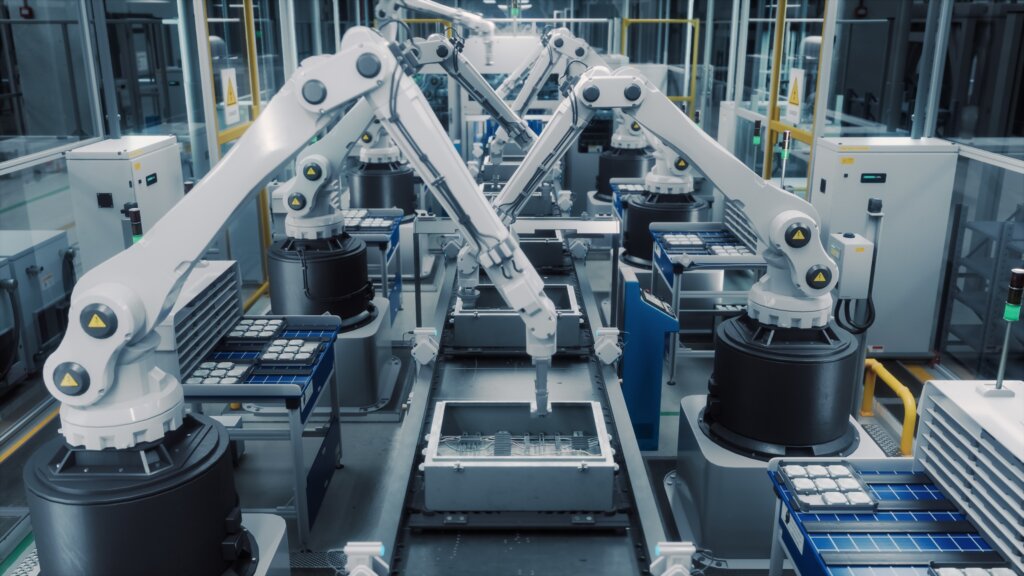
Example of an automated industrial assembly line with robotics, and the supporting electrical infrastructure required on the factory floor.
Why Electrical Systems Get Derated
Electrical equipment is designed to operate within specific environmental and loading parameters to ensure optimal performance and longevity. However, real-world conditions often deviate from these assumptions, requiring engineers to account for factors that can compromise reliability and safety.
Elevated Ambient Temperatures
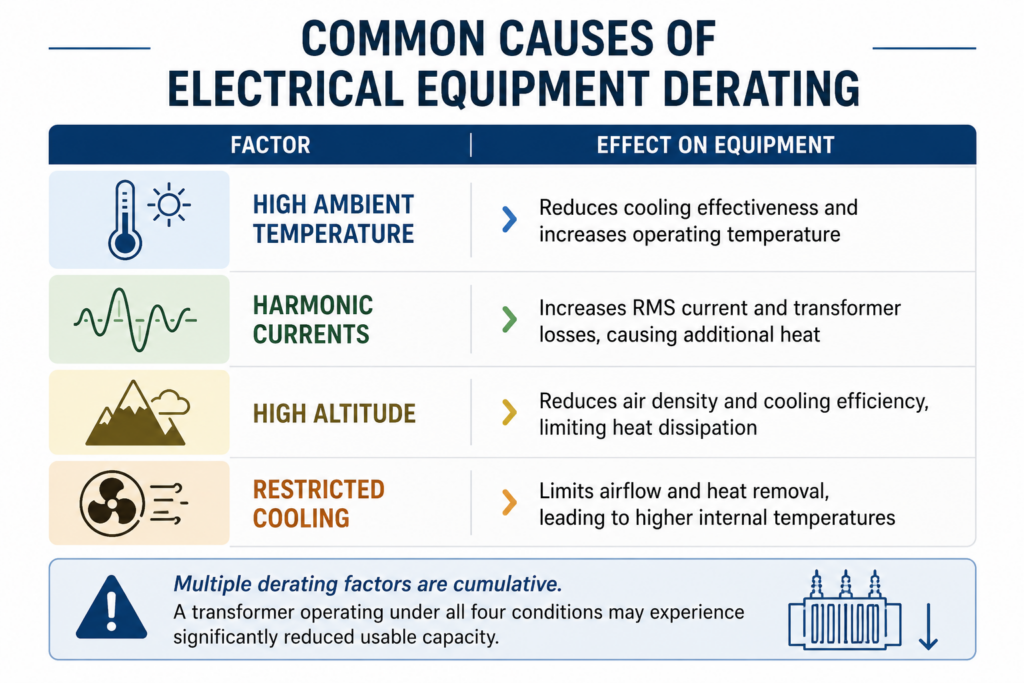
Heat remains one of the most significant factors affecting the performance of electrical equipment. Transformers, reactors, switchgear, and power conditioning equipment all depend on effective heat dissipation to maintain acceptable operating temperatures. When ambient temperatures rise above design assumptions or when airflow becomes restricted, internal temperatures increase accordingly.
Even modest temperature increases can accelerate insulation aging and reduce equipment life expectancy. To prevent overheating and preserve reliability, engineers often reduce allowable loading under elevated temperature conditions. In many industrial environments, equipment rooms, electrical enclosures, and outdoor installations routinely experience temperatures that exceed standard rating assumptions, making thermal derating a common design consideration.
Harmonics Created by Non-Linear Loads
Modern facilities contain more non-linear loads than ever before. Variable frequency drives, UPS systems, LED lighting systems, battery energy storage systems, data centers, and other power electronic devices draw current in pulses rather than pure sine waveforms. These distorted waveforms introduce harmonic currents into the electrical system.
While harmonic distortion may not always appear problematic when viewed through basic kVA calculations, it creates additional losses within transformers and other power equipment. Harmonics increase Root Mean Square (RMS) current levels and generate higher eddy current and stray losses within transformer windings and structural components. The result is additional heat.
In many cases, equipment operating within its apparent nameplate loading can still experience excessive temperature rise because harmonic currents create losses that standard ratings do not fully account for. As harmonic content increases, derating often becomes necessary to maintain acceptable operating temperatures.
Altitude and Environmental Conditions
Environmental factors extend beyond temperature alone. At higher elevations, air density decreases, reducing the effectiveness of natural and forced-air cooling systems. Because electrical equipment relies heavily on convective heat transfer, reduced air density limits its ability to dissipate heat. For this reason, manufacturers and industry standards often specify altitude-based derating requirements above defined elevations.
Other environmental conditions (e.g., dust, contamination, enclosure restrictions, and inadequate ventilation) can further reduce cooling effectiveness and contribute to the need for derating.
When multiple factors combine, the impact becomes even more significant. A transformer operating in a high-temperature environment while supplying harmonic-rich loads and experiencing restricted airflow may require substantial derating to remain within safe thermal limits.
How Power Conditioning Can Reduce Derating Requirements
Transformers can sometimes become the focal point of derating discussions because they occupy a unique position within electrical systems. Although often viewed as passive components, transformers are fundamentally thermal machines. Their long-term reliability depends heavily on controlling temperature rise within windings and insulation systems.
Derating addresses the symptoms of challenging operating conditions. Power conditioning addresses many of the underlying causes. Modern power conditioning solutions help improve power quality, reduce harmonic distortion, stabilize voltage, and limit the thermal stresses that drive derating decisions.
Isolation transformers, harmonic-mitigating transformers, passive and active filtering technologies, and voltage regulation systems can all contribute to a more predictable electrical environment.
When harmonic currents are reduced before they reach downstream transformers, equipment experiences lower internal losses and reduced temperature rise. When voltage remains stable, connected loads draw current more consistently, minimizing stress during transient conditions. The result is not necessarily the complete elimination of derating. Every electrical system operates within physical limits, and some level of derating may remain appropriate depending on the application. However, effective power conditioning can significantly reduce the extent of derating required to achieve reliable operation.
Instead of accepting reduced capacity as an unavoidable consequence of modern loads, engineers can often improve usable system performance by addressing the root causes of thermal stress.
Conclusion: Derating Is a Design Signal, Not a Failure
Derating is not something engineers should avoid discussing or treat as evidence of poor system performance. It is a practical engineering tool that reflects the realities of modern electrical systems. When derating appears in a project, it often signals that real-world operating conditions differ from the assumptions behind a nameplate rating. Temperature, harmonics, cooling limitations, and environmental factors all influence how much usable capacity electrical equipment can safely deliver. Viewed correctly, derating provides valuable insight into system behavior.
By combining thoughtful transformer selection with appropriate power conditioning strategies, organizations can better manage thermal stress, improve reliability, and maximize usable capacity under real operating conditions.
The goal is not necessarily to eliminate derating altogether. The goal is to ensure that derating becomes an intentional design parameter rather than an unexpected limitation discovered after startup.
Partner with Trystar to uncover and resolve the root causes of unexplained heating, nuisance trips, or unexpected capacity limitations in your electrical system. Let us be your trusted advisor to discuss, recommend, and deliver custom-tailored solutions that ensure reliable performance and lasting power quality for your specific application.