When emergency power systems (including UPS and battery energy storage) are discussed, conversations often begin and end with generator sizing. While generator capacity remains a critical design consideration, the National Electrical Code (NEC) recognizes that emergency power reliability involves much more than simply selecting a generator capable of supporting connected loads. NEC Article 700 governs emergency systems that provide power to life-safety functions during a loss of normal utility service. Within that framework, NEC 700.4 establishes requirements for commissioning and servicing emergency power systems, reinforcing the need to verify system performance and maintain long-term operational readiness.
While proper commissioning and servicing are essential to long-term system reliability, they represent only one aspect of a resilient emergency power strategy. Consulting-specifying engineers must also consider how system architecture, load prioritization, maintainability, and future expansion contribute to dependable performance throughout the facility’s lifecycle. These design considerations help ensure emergency power systems remain reliable not only on the day they are commissioned, but throughout years of operation.
An integrated approach to NEC 700.4 compliance safeguards both critical operations and occupant safety in the face of unforeseen events. As critical facilities continue to grow in complexity, emergency power capacity must be evaluated as a complete system design challenge rather than a standalone equipment selection exercise. This article explores the key considerations for engineers, including system integration, code compliance, and strategies for optimizing reliability and resilience. Additionally, it provides insights into best practices for designing emergency power systems that meet both current and future demands.
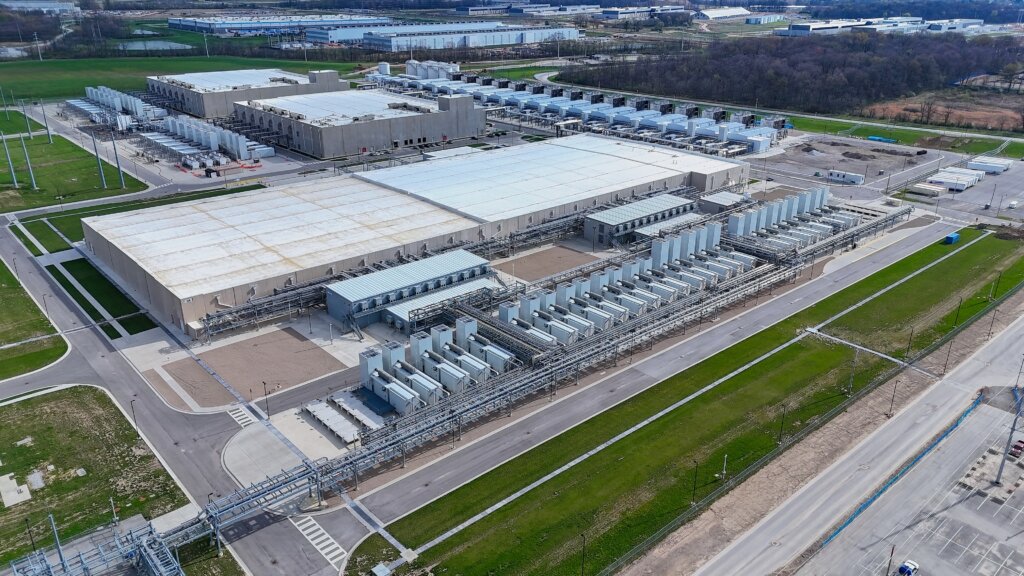
An example of the complexity of today’s critical facilities: a massive data center equipped with extensive cooling and backup power systems.
Engineering Beyond Code Compliance
The primary objective of NEC 700.4 is straightforward: to ensure that emergency power systems are properly commissioned and maintained so they can deliver reliable performance; ready to perform when utility power is lost. This requirement ensures that critical life safety functions (e.g., emergency lighting, fire alarms, essential communications, etc) remain operational during power outages. By mandating rigorous standards for emergency power, NEC 700.4 helps protect building occupants and supports uninterrupted facility operations in times of crisis.
Rather than focusing solely on initial installation, NEC 700.4 emphasizes the importance of verifying and sustaining emergency power system performance throughout its operational lifecycle. Key considerations include commissioning witness testing, periodic testing, servicing, and recordkeeping to demonstrate that emergency systems continue to perform as intended. NEC 700.4 also recognizes the importance of testing under load and providing a temporary source of power when servicing the alternative source. Together, these requirements reinforce emergency power system reliability, maintainability, and operational readiness.
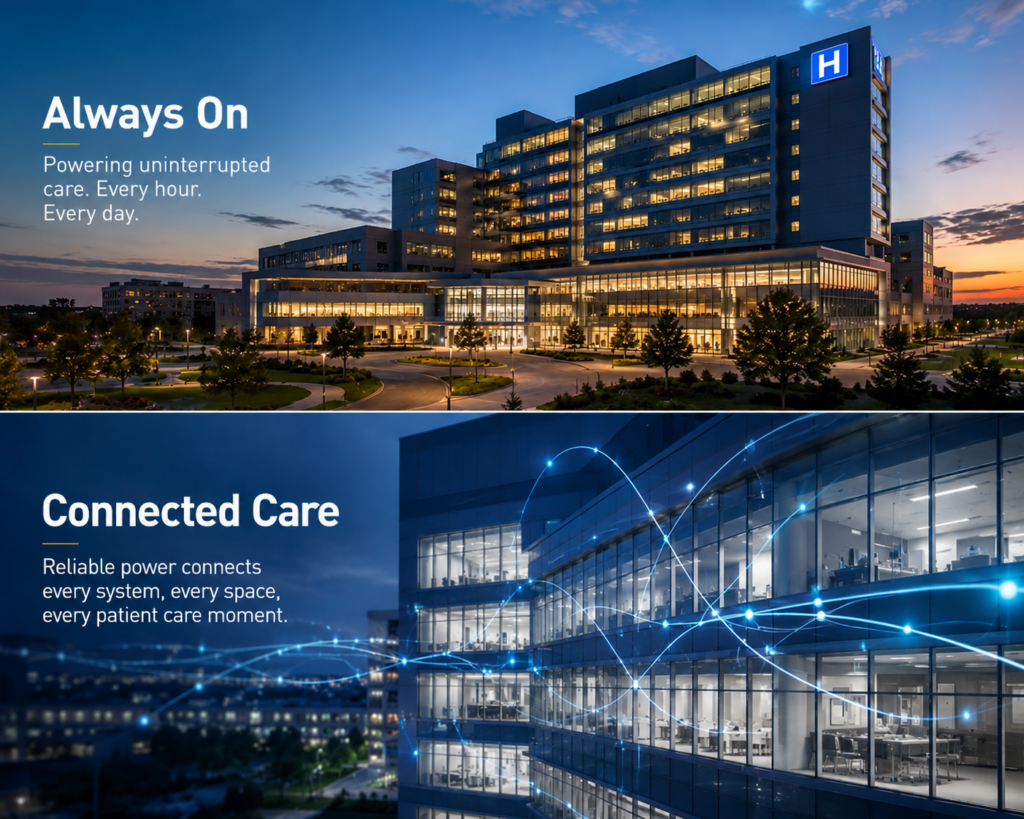
Compliance with NEC 700.4 becomes increasingly important in facilities where emergency power systems support:
- Healthcare environments
- Data centers
- Airports
- Transportation infrastructure
- Government facilities
- Commercial high-rise buildings
- Industrial manufacturing operations
In each of these applications, loss of emergency power can impact occupant safety, business continuity, or critical operations.
The code also recognizes that emergency power systems frequently support multiple categories of loads. In addition to emergency loads, these systems may be required to supply legally-required standby loads (e.g., mandated for public life safety) and optional standby loads (e.g., supporting business continuity) … each with distinct operational priorities and code requirements. This layered approach demands careful coordination to ensure that emergency loads are always prioritized, while still providing support for other critical functions when capacity allows. Properly categorizing and managing these loads is essential for maintaining compliance and ensuring reliable performance during emergencies.

The challenge is not simply determining whether enough generation exists on paper. The challenge is ensuring the entire power distribution architecture performs as intended when the facility experiences an outage.
Capacity Planning Beyond Nameplate Ratings
Emergency power systems are often designed around expected load demand at the time of construction. However, facilities rarely remain static. Equipment is added … spaces are renovated … technology evolves … and new operational requirements emerge.
As a result, a generator that adequately served a facility when it was commissioned may face significantly different loading conditions years later. Facility expansions, technology upgrades, and changes in operational requirements can all increase the demand on emergency power systems over time. Without regular reassessment and capacity planning, there is a risk that the generator may become undersized, compromising the reliability of critical emergency functions. Engineers evaluating emergency power capacity should consider:
- Future load growth
- Load diversity
- Motor starting requirements
- Harmonic-producing equipment
- Redundancy objectives
- Peak demand scenarios
- System expansion plans
- Selective load management and prioritization
Designing for today’s load profile alone can introduce risks that become apparent only during an actual emergency event. A resilient emergency power strategy anticipates how facility requirements may evolve over the life of the infrastructure.
The Often-Overlooked Maintenance Challenge
One of the most significant threats to emergency power availability is not equipment failure … it is planned maintenance. Generators, transfer switches, switchgear, and distribution equipment all require periodic inspection, testing, repair, and replacement. During these activities, facilities must maintain continuity of service to critical loads.
This operational reality has become increasingly important as code requirements and industry standards place greater emphasis on maintaining emergency system availability during maintenance events. Engineers must now design systems that allow for routine testing and servicing without jeopardizing the continuous operation of critical loads. This often necessitates the incorporation of redundant equipment, automatic transfer schemes, and robust maintenance protocols to ensure uninterrupted emergency power even during planned outages. For consulting and specifying engineers, this raises important design questions:
- How will the facility maintain emergency power during generator service?
- How will critical loads remain protected during switchgear upgrades?
- What provisions exist for temporary power connections?
- Can maintenance be performed without creating operational risk?
Facilities that lack a defined temporary power strategy often discover that routine maintenance becomes a complex and costly operational challenge.

Example of an electrician performing field maintenance.
Designing For Emergency Power Resiliency
Resiliency is increasingly becoming a defining characteristic of modern emergency power systems. Rather than focusing exclusively on equipment ratings, leading facility owners are evaluating how quickly systems can adapt to changing conditions, recover from failures, and maintain operation during planned and unplanned events. This shift requires a comprehensive approach to system design, incorporating features such as real-time monitoring, predictive maintenance, and flexible load management. Ultimately, resilient emergency power systems are essential for safeguarding critical operations and minimizing downtime in today’s complex facility environments.
The following design strategies can improve emergency power resiliency:
- Temporary Power Integration
Incorporating temporary power connection solutions during the design phase enables facilities to seamlessly connect portable generators and maintain critical operations without costly retrofits when permanent equipment is unavailable.
- Load Management And Prioritization
Advanced load management strategies prioritize emergency loads over less critical ones, ensuring both code compliance and uninterrupted facility operations.
- Flexible Distribution Architectures
Designing power distribution systems with flexibility for future expansion minimizes lifecycle costs and enhances long-term reliability for modern facilities.
- Maintainability As A Design Requirement
Emergency power systems designed for safe, straightforward maintenance ensure operational continuity and provide lasting value beyond initial installation.
- Designing Emergency Power Systems For Real-World Operating Conditions
Consulting-specifying engineers must prioritize design decisions that address routine maintenance, equipment replacement, and system upgrades … all while balancing code compliance, uptime, and often before an actual emergency occurs.
- Building Resiliency Into The Design Process
Emergency power resiliency results from a coordinated design strategy that integrates generation, distribution, transfer, maintenance, and temporary power planning into a unified system.
By addressing these considerations during the design phase, engineers can help owners reduce operational risk, improve maintainability, and increase confidence that critical systems remain available and operational when they are needed most.
Looking Beyond Compliance
NEC 700.4 establishes an essential foundation for emergency power system design. However, the most successful projects go beyond minimum compliance requirements. For consulting-specifying engineers, the goal is not merely to satisfy a code provision. The goal is to create emergency power systems that perform reliably throughout their operational life cycle, support evolving facility requirements, and maintain continuity during both planned and unplanned disruptions.
As facilities become more dependent on continuous power availability, emergency power capacity should be viewed not simply as a calculation, but as a critical component of overall facility resiliency. By considering capacity, maintainability, temporary power preparedness, and load prioritization together, engineers can help owners build systems that remain ready for the moments when reliability matters most.
Want to know how critical changes to NEC 700.4 can affect your design? Contact our team to begin those conversations!