Our team is here to support you and solve your power challenges. Connect with our responsive experts today to learn about our customized power solutions and products.
Series 50 Rectifier (100 V - 1000 VDC, 500 A - 5,000 A)
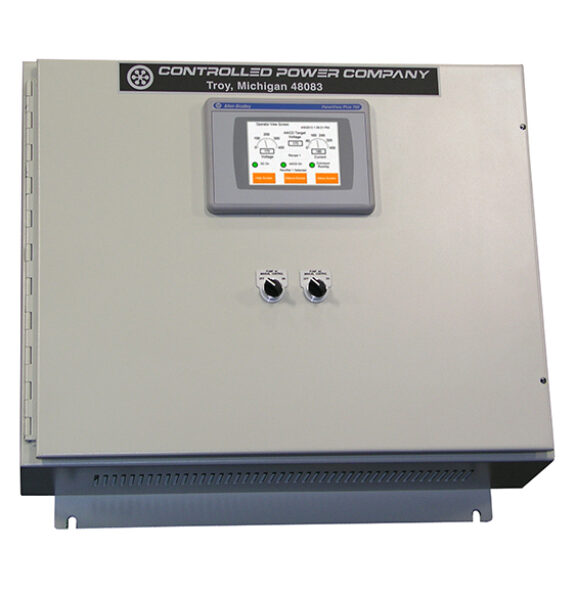
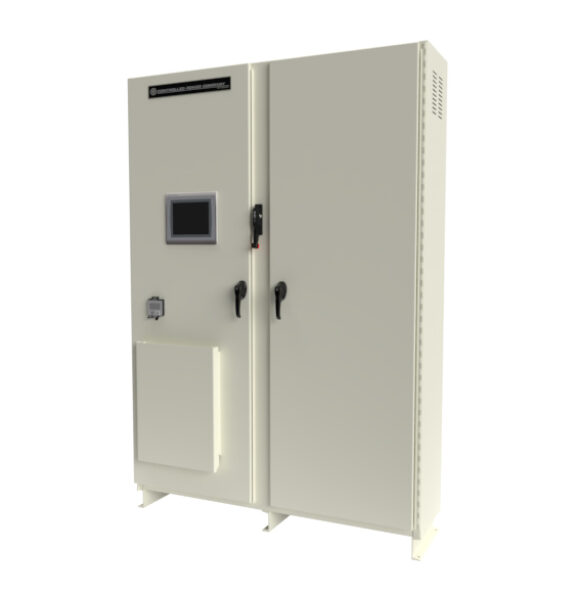
The Trystar Series 50 Rectifiers (Models 506 and 5012) deliver reliable, regulated DC power for demanding industrial applications such as e-coating, anodizing, and metal finishing. Featuring a rugged single-transformer SCR design, they ensure consistent performance in harsh environments with output voltages from 100VDC to 1000VDC and currents up to 5000A. The Model 506 provides dependable 6-pulse rectification, while the Model 5012 offers a 12-pulse design with reduced ripple and harmonics for large-scale operations. With flexible cooling options, advanced monitoring, and integration with plant PLCs, the Series 50 ensures efficiency, durability, and process quality.



Features
- Versatile Industrial Application – Engineered for electrocoating, anodizing, and metal finishing processes requiring reliable high-voltage DC power.
- Model Flexibility – Choose the Model 506 for general DC needs or the Model 5012 for reduced ripple and harmonics in large-scale operations.
- Precise Performance – Provides tight voltage and current regulation (±0.5%) to ensure consistent coating and finishing quality.
- High Efficiency Design – Operates at up to 95% efficiency, lowering energy costs and improving overall productivity.
- Cooling Options – Available in air- or water-cooled configurations to match installation needs and environmental conditions.
- Advanced Monitoring & Control – Digital metering, local/remote controls, and optional monitoring packages simplify maintenance and troubleshooting.
- Rugged, Reliable Construction – Industrial-grade enclosures (NEMA 1, 2, or 3R) ensure durability in harsh factory environments.
- Seamless Integration – Compatible with plant PLC networks for streamlined process management and automation.
Specifications
- Electrical:
Input AC Voltage: 208V, 240V, 480V, or 600V; 3 Phase (other voltages available, consult factory)
Input Line Variation: ± 5% from nominal (optional wider ranges available)
Frequency: 60 Hz (50 Hz optional)
Output DC Voltage Range: 100V – 1,000V
Output DC Current Range: 500A – 5,000A
Power Factor: 90% typical at full output - Performance:
Output Voltage Regulation: ± 0.5%
Output Current Regulation: ± 0.5%Efficiency: 95% typical, size dependent
Ripple: Model 506— 5% (full voltage & current), optional filter provides 5% when operating within 25%–100% of full range; Model 5012— 3% (full voltage & current), optional filter provides 1% when operating within 25%–100% of full range
Reliability: 65,000+ hours MTBF - Environmental:
Ambient Operating Temperature: 0ºC (32ºF) to 40ºC (104ºF) max (50ºC optional)
Humidity: 95% non-condensing
Elevation: Up to 1524 m (5000 ft) without de-rating
Storage Temperature: -20ºC (-4ºF) to 50ºC (122ºF) - Mechanical:
Cooling Options: Air- or water-cooled
Enclosures: NEMA 1, NEMA 2, NEMA 3R standard; optional stainless steel with or without powder coat finish - Controls & Monitoring:
Standard: Digital meters for output voltage and current, AC/DC power indicators, control potentiometers for voltage/current, regulation mode switch, automatic DC overload shut-off
Options: Local or remote controls, e-coat specific features (amp-hour meters, AnodeMON™, enhanced monitoring, DC transfer switch, adjustable ramping, AACD, ripple meter, etc.)
Documentation
Product Brochures
Data Sheets
Instruction / Owners Manuals
Case Studies
Support

Services
Technical Support, Start Up Support, Preventative Maintenance, Field Service, In-house Repair, Spare Parts
Website: https://www.trystar.com/services/request-for-services/
Phone: 507-333-3990,1
Email: services@trystar.com

Sales Support
Quotes, lead times, and general product questions
Website: https://www.trystar.com/contact/
Phone: 507-333-3990,2
FAQs
What size rectifier do I need?
Rectifier sizing is influenced by many variables, including part size, anode cell area, chemical/paint characteristics, and process time. The chemical/paint or the finishing system supplier usually recommends the rectifier size required for the application. In e-coat, the output voltage of the rectifier is usually 400V or 500V maximum. As a general rule-of-thumb, output current is usually 2.5A per square foot of metal for a 2-minute dwell time, with a film build of 1 mil of paint.
What are the differences between the Model 506 and Model 5012 designs and their applications?
The Model 506 is a 6-pulse rectifier design used for most DC powered applications. The Model 506 provides reliable, regulated power for applications requiring 100VDC. AC output ripple is usually 5%, from 25% to 100% of the output voltage range. The Model 5012 is a 12-pulse rectifier used in applications requiring lower output AC RMS ripple and reduced input harmonics. AC output ripple for Model 5012 systems is 1%, from 25% to 100% of the output voltage range. Current harmonics are 15%.
Can I control or monitor the rectifier with my PLC?
Yes. As an option, Trystar offers single channel computer interface cards for monitoring and/or control of the rectifier. The computer interface card can be configured for 0 to 10 volt, 0 to 5 volt, or 4 to 20 mA signals. Additionally, we offer integrated distributed I/O modules so that communications with the PLC can be performed over Ethernet or serial connections, instead of running analog signals.
Do I need a separate feeder transformer for the rectifier?
The rectifier does not require a separate feeder transformer; however depending on site requirements, one may be necessary. Please discuss this with an electrical contractor or a consultant for further information.
How can I increase my rectifier current output?
A second Series 50 rectifier may be connected in parallel. The parallel control option will allow both units to equally share the load current. Some changes to the existing unit may be required.
Which is better: air- or water-cooling?
The environment where the rectifier will be placed usually determines the best type of cooling. For harsh, corrosive, or high-temperature environments, water-cooling is best suited.
How can I reduce or eliminate downtime?
Purchasing and installing a second backup rectifier connected in parallel with the existing rectifier and a DC switch, will virtually eliminate downtime. In this scenario, if a rectifier happens to go down or is being serviced, a backup unit can be brought online within a few minutes. For more information, see our Options document entitled “DC Transfer Switches” for details about DC switch and backup rectifier configurations.
Which leg of the rectifier is grounded?
The rectifier output is isolated, allowing either leg to be grounded per process requirements.
How can I reduce the floor space needed for rectifiers used in my process?
Trystar is able to custom design rectifier cabinets for limited floor space or single side access. We are also able to provide multiple rectifiers in a single enclosure.
When do I need a DC switch?
A DC switch is used for isolating the output of a rectifier and may be configured for various applications to reduce downtime. When downtime is unacceptable, a DC switch connected to the normal production unit and a standby unit provides a quick means of switching between the two in the event of a failure or for routine maintenance. The DC switch ensures that DC power is not present in the rectifier, so that it can be serviced safely by repair personnel. While the down unit is being serviced, the other unit will operate normally. You will not need to shut down the line when servicing the rectifiers. For multi-zone operation, there are many different configurations for DC switches. The most common is that a DC switch enables one rectifier to supply power to any zone. This can be either of the two primary rectifiers, or even a standby. A DC switch may also be configured to switch one rectifier between multiple tanks.
Designed for Real-World Demands
Discover how this product is used across markets for different applications.

Industrial
Enhance productivity, efficiency, and safety in various industrial applicationswith Trystar’s innovative, customer-centric solutions gained through our experience helping our customers solve their power challenges.
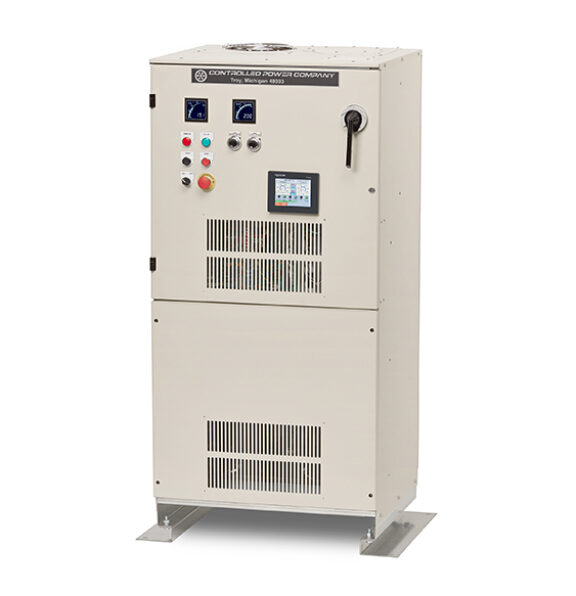
Series 70 AutoCoat MAC Rectifier (100 V – 450 VDC, 200 A – 400 A)
Designed for Real-World Demands Discover how this product is used across markets for different applications.